In mink houses built before early 2015, Icelandic law sets the smallest cage at 30 by 70 centimetres; in newer houses, 30 by 90. One farm still keeps mink. The draft Animal Welfare Act, open for comment until 4 December 2026, leaves the rules and the farm in place.
Mating. In the wild mink mate from February to April, most in March, Iceland's Natural Science Institute says; no Icelandic source gives the dates on farms. Starving the animals is banned, but body condition may be controlled by feeding for a short time before mating.
Checks rise to three a day until 19 July. In the wild most kits are born in the first half of May, six or seven to a litter on average. Bændablaðið reported about 6,000 females and 24,000 to 25,000 kits on the five southern farms in their last season, about four a female by our division.
Weaning may not come before seven weeks unless the kits' or the female's health or welfare requires it. From then the regulation calls them juveniles, until 30 weeks, and allows one to a cage. EFSA, the EU's food-safety authority, writes that stereotypic behaviour, mainly pacing back and forth, typically begins at weaning, is not seen in the wild and is not fully fixed in form until seven months of age.
Checks fall to twice a day. Until 15 December two juveniles may share one cage of the minimum size, and more at set times, never more than four, with 850 cm² added for each beyond two. EFSA found that wounds could be substantially reduced if juveniles were kept in male–female pairs until about September or October, then alone, and each had enough resources, for which standard cages may lack room.
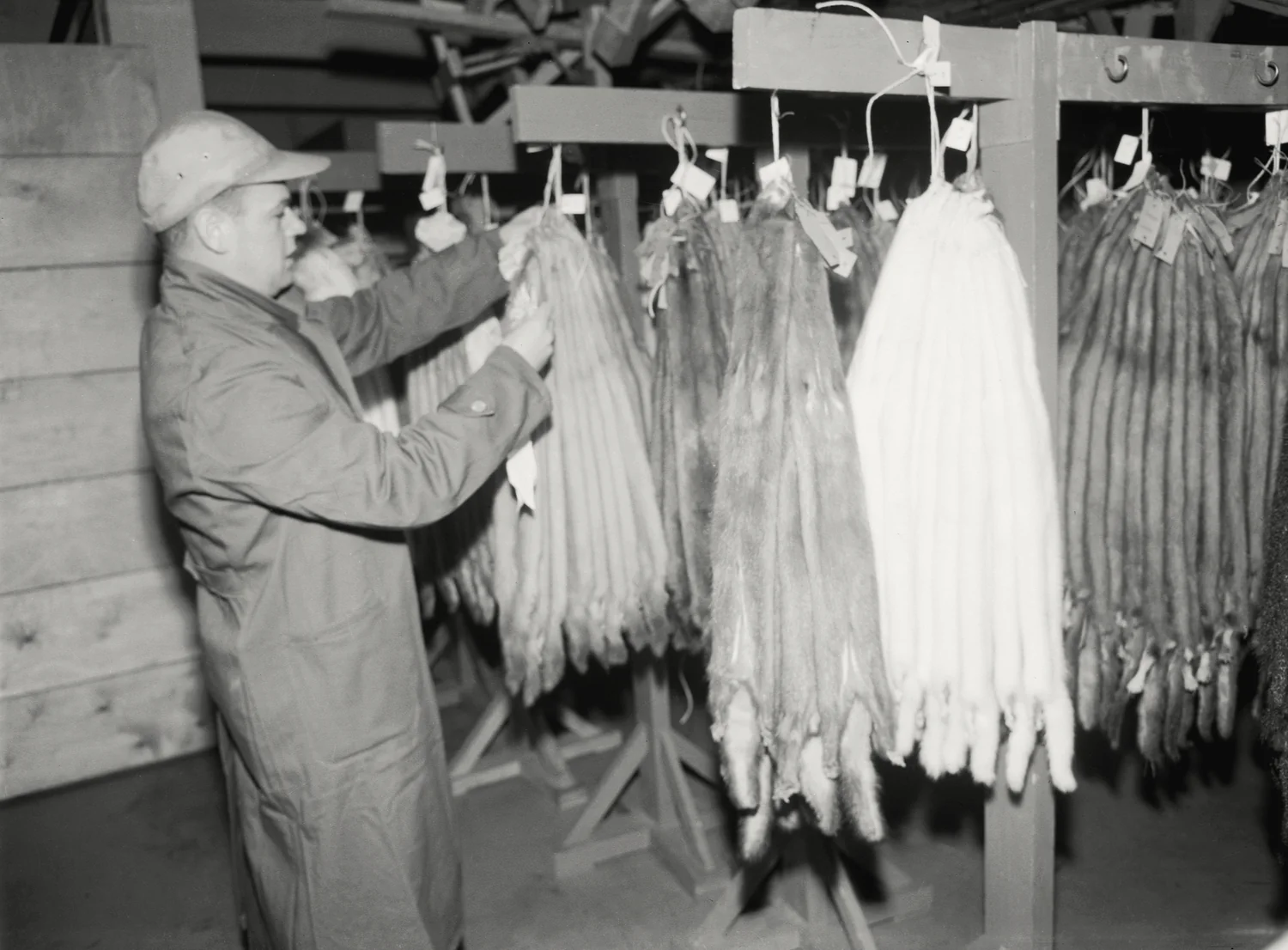
Pelting, in the regulation's words, is seasonal work: killing the mink, skinning them and processing the skins. Killing must be done out of sight of other animals, in purpose-made killing boxes. Kits born from late April are about six to seven months old by now, by our reading of the regulation's dates; no Icelandic source states the age.
Checks fall to once a day “from 15 December or once pelting is finished” until 19 April, and the two-to-a-cage allowance ends. In early December 2025, as the five southern farms closed, the chair of the fur farmers' branch, Björn Harðarson, told Bændablaðið: Við erum að pelsa allt niður, “We are pelting everything down.”
In December 2025 the five farms in South Iceland pelted about 30,000 mink, by Bændablaðið's reckoning, and stopped. One farm kept its mink.
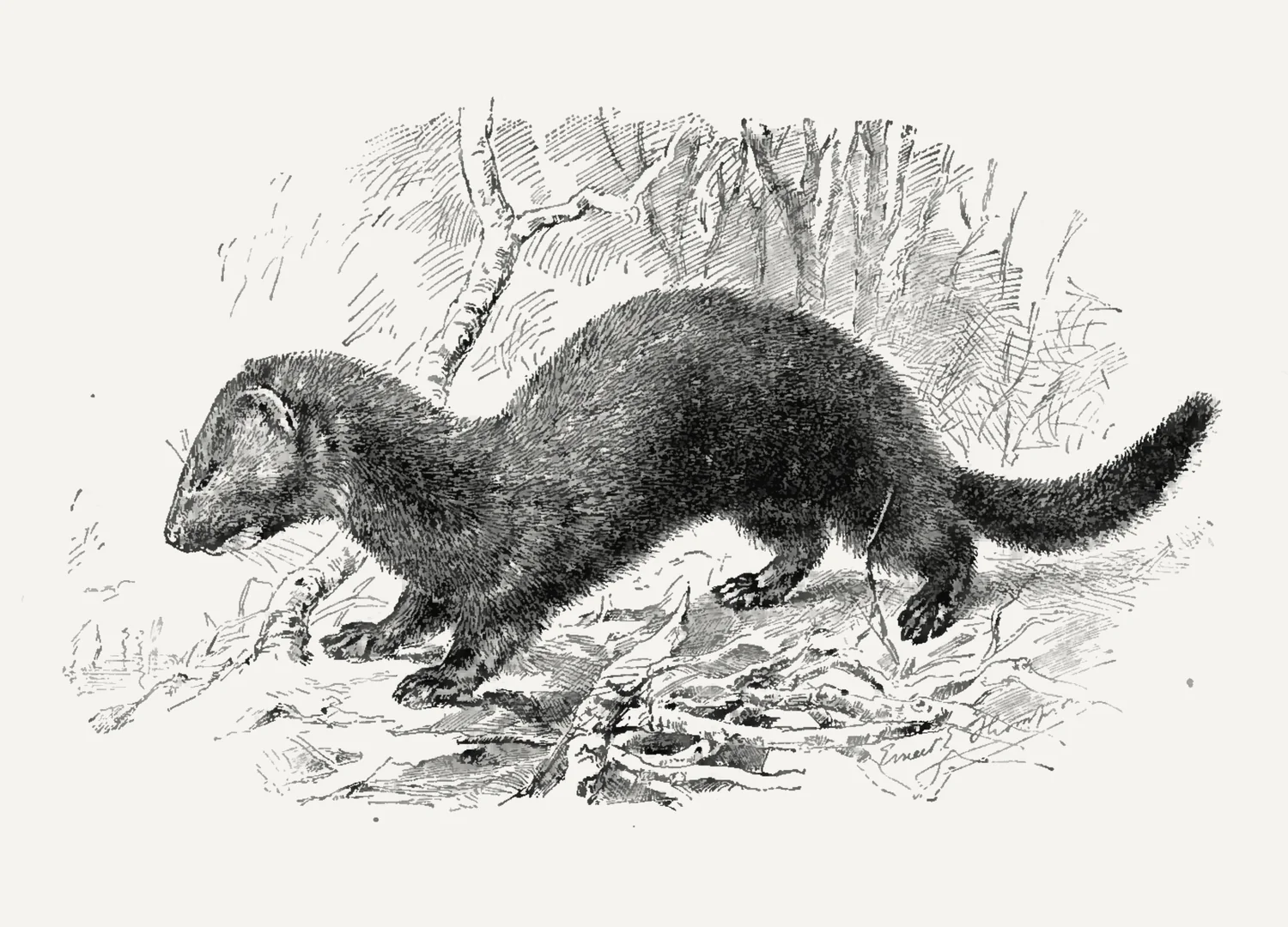
Regulation 1277/2014 · Natural Science Institute of Iceland · EFSA, 2025 · +1Iceland's Natural Science Institute describes the mink as a skilled swimmer that dives for prey in fresh water and the sea. Its territories are often long and narrow, along a shore or a riverbank. Adult mink are solitary and avoid other mink, except in the mating season.
EFSA set the two spaces side by side in 2025: in the wild a territory may extend to one square kilometre; a standard cage gives a mink 0.21 to 0.28 square metres, plus the nest box. Iceland's minimums, 0.21 and 0.27 square metres, fall within the cage dimensions EFSA assessed, by our comparison.
Natural Science Institute of Iceland · EFSA, 2025 · Regulation 1277/2014
The EU's food-safety authority assessed mink, foxes, raccoon dogs and chinchillas kept for fur, in the cage systems in use; killing was outside its brief. For every species it ranked three welfare problems as the most relevant: restriction of movement, the inability to explore or forage, and too little or too much stimulation of the senses, all linked to cage size and barrenness. Its conclusion: In the majority of cases, it is concluded that neither prevention nor substantial mitigation of the identified WCs is possible in the current system.
WCs are welfare consequences. For mink, restriction of movement cannot be prevented or substantially mitigated in the current system
.
In a study published in Nature in 2001, Mason, Cooper and Clarebrough let 16 adult mink reach several resources through weighted doors. As EFSA summarises it, the mink pushed as much weight to reach open water as to reach food, and blocking the water raised their cortisol by about a third, against about half when food was blocked. EFSA also reports studies that found no difference, writes that mink do not swim every day, and says it is unclear whether these behaviours are specific needs. For the cage it wrote: In the current system, the available space is not enough to allow the addition of open water resources.

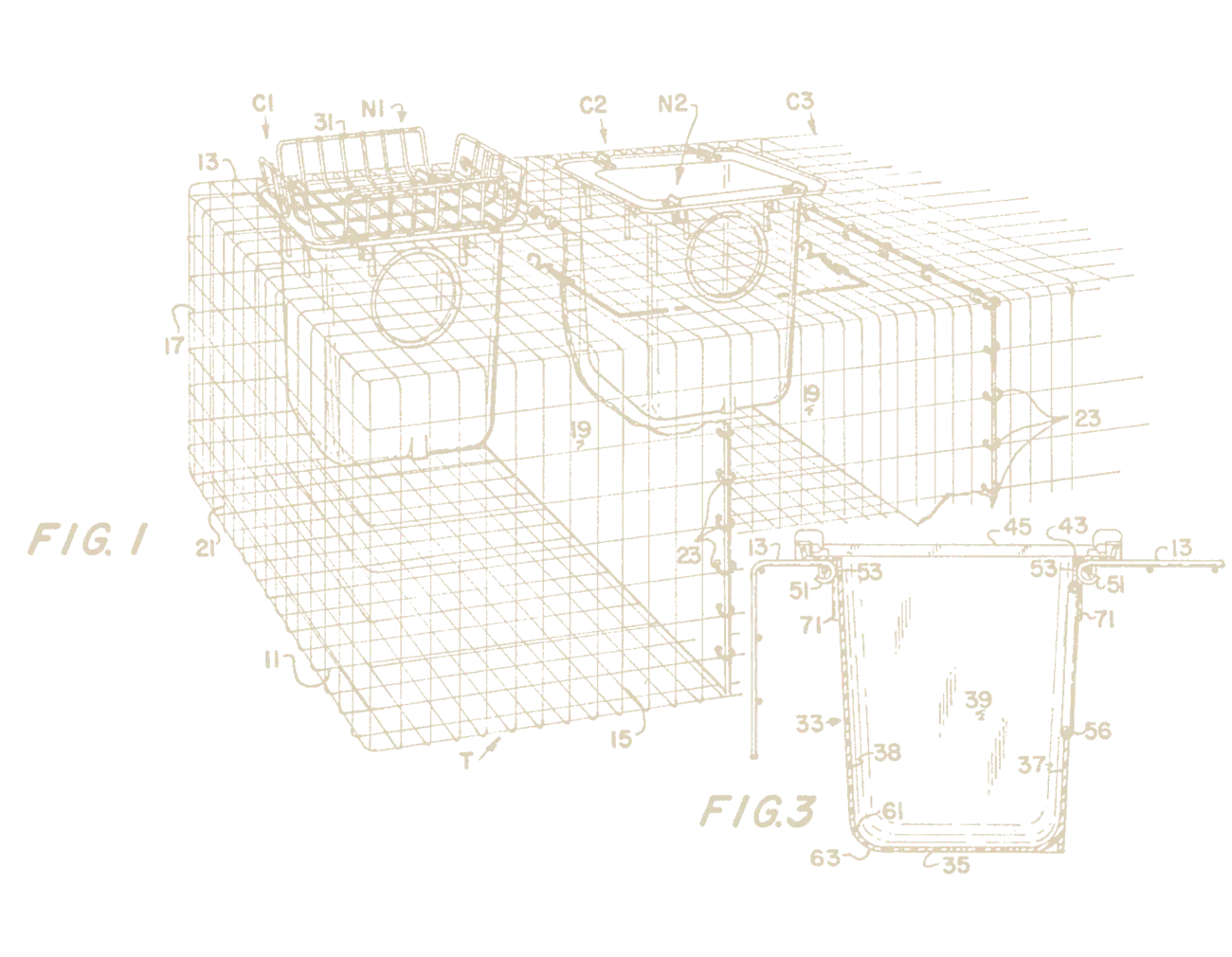
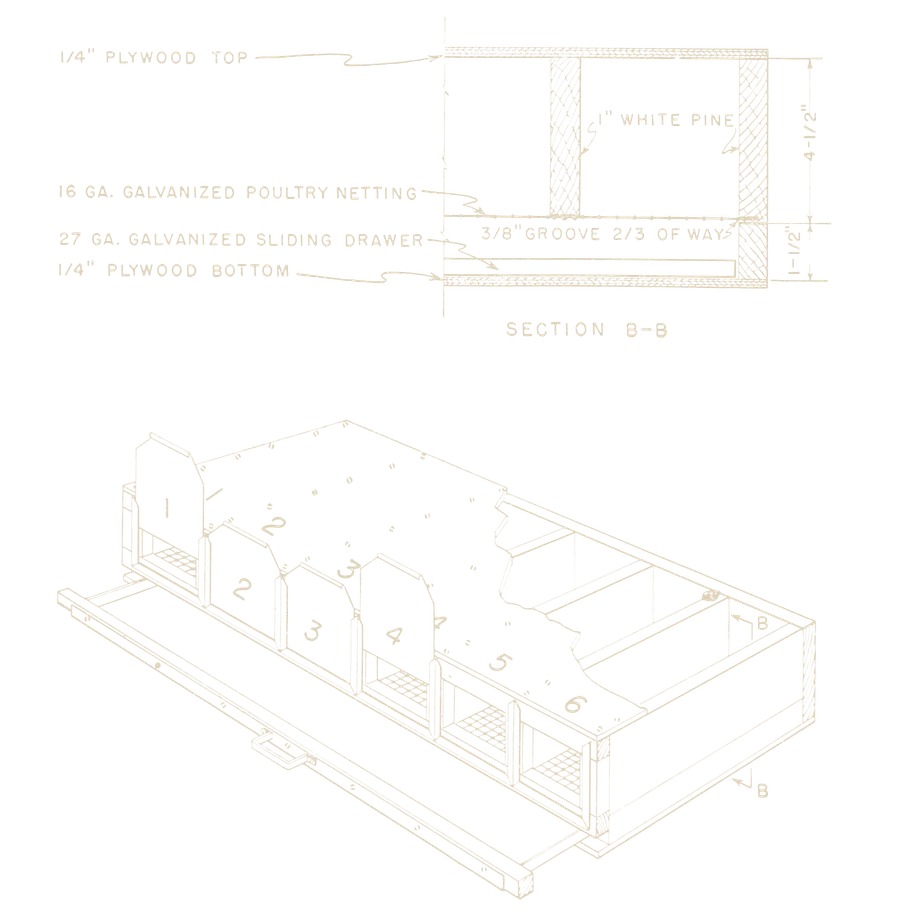
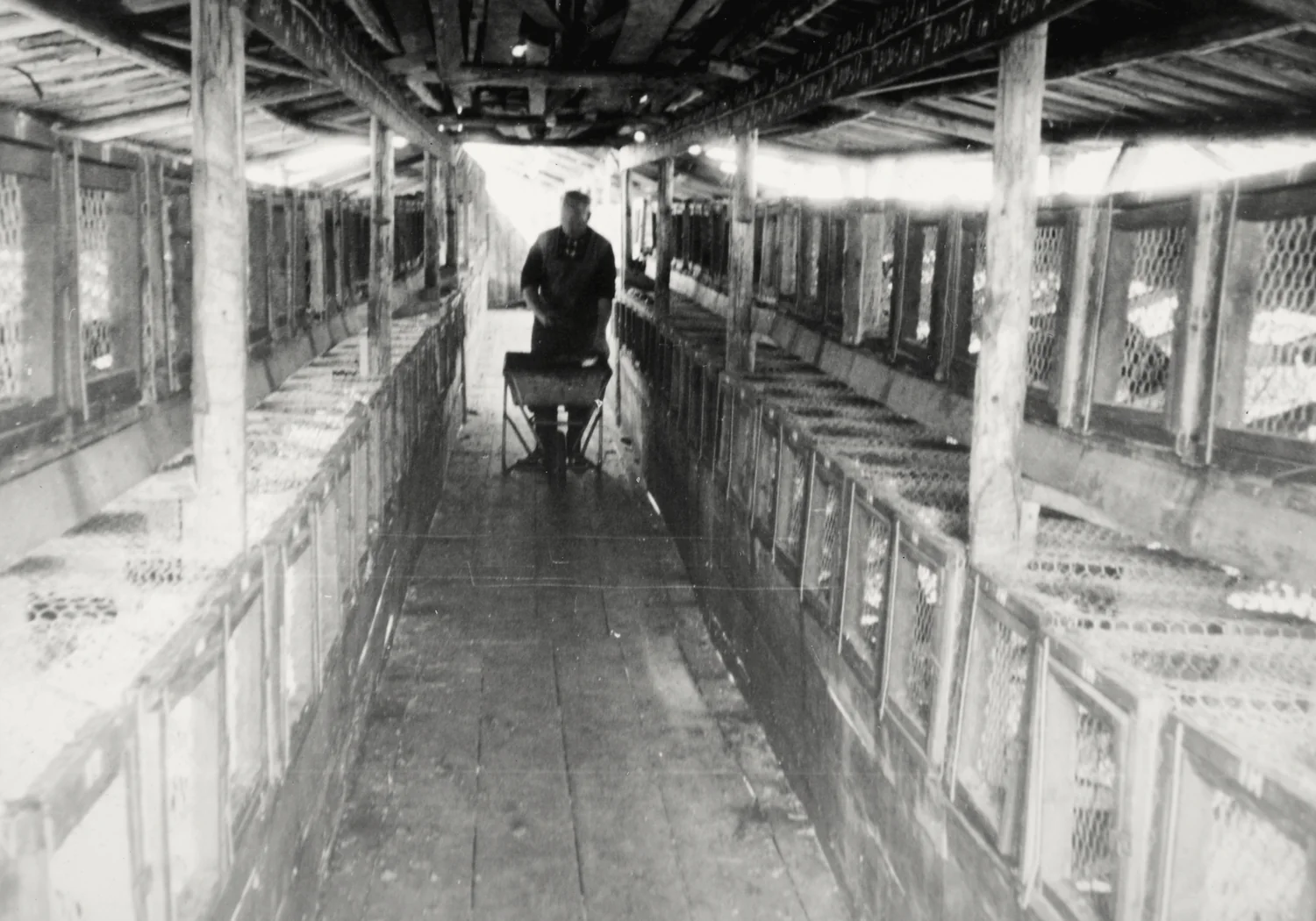
In houses built before early 2015 the smallest cage is 30 by 70 centimetres, about 3.4 sheets of A4 paper.
In houses built since, it is 30 by 90, or 2,700 square centimetres. Both must be 45 centimetres high, and the nest box does not count toward the floor. A female keeps the same floor with its kits until they are weaned. Which Icelandic houses fall under which rule is not public.
Article 7 asks that a caged mink can show “as natural and varied behaviour as possible”. EFSA: The length of the standard cages restricts the forward movement of mink […]. The animals will run back and forth, which may develop into stereotypic pacing.
Signed by the fisheries and agriculture minister, Sigurður Ingi Jóhannsson, on 18 December 2014. Eight of its rules:

Iceland bans killing animals with engine exhaust, except fur animals.
The Animal Welfare Act of 2013 allows it in machines specially designed and made for killing fur animals, if MAST, the food and veterinary authority, has approved them. No official source we found states which method Icelandic farms use or whether MAST has approved a machine. The Animal Protection Society of Iceland says the animals are killed with carbon monoxide.
The measurements come from laboratories abroad, reviewed by Canada's National Farm Animal Care Council in 2012. Mink in pure carbon dioxide lost consciousness after about 19 seconds and died after about two and a half minutes; in 4 per cent carbon monoxide they lost it after about a minute and died after about three and a half. Offered a chamber of 80 per cent carbon dioxide, one of eight mink went in, and retreated at once. The UK's Animal Welfare Committee found in February 2026 no evidence that killing is audited under the existing welfare protocols for farmed fur.
Act 55/2013 · DÍS, 2026 · NFACC review, 2012 · +1Statistics Iceland publishes accounts for every entity classed as a fur farm. They made a profit every year from 2009 to 2013; in 2013 revenue peaked at ISK 2,285m and net profit at ISK 508m. From 2014 they made a net loss every year to 2024 except 2021.
Net results from 2014 to 2024 add up to a loss of ISK 1,418m, by our sum. Equity has been negative every year since 2018; in 2024 debt of ISK 1,054m exceeded assets of ISK 888m. Statistics Iceland has published none for 2025 yet.
Statistics Iceland, 2008–2024
In 2013 Iceland exported 192,426 skins, all to Denmark; in 2025, 42,877, all but one to Finland. The 2025 value was under a tenth of 2013's, in money of each year, by our division.
Statistics IcelandBjörn Harðarson of Holt I told Bændablaðið on 4 December: We are five fur farmers in South Iceland who are stopping. It's for financial reasons, you could say; it just doesn't add up any more.
The next day the paper reported that the jointly owned feed mill at Selfoss, which made feed for five of the six farms, had closed. Bjarni Stefánsson of Tún I, 34 years in fur: It came rather suddenly, because others were stopping, so the feed mill had no basis and it has closed. Otherwise I'd have carried on for a while.
At Dalsbú, which makes its feed on the farm, Ásgeir Pétursson said: All I know is that we carry on.
| Year | Revenue, ISK m | Net profit or loss, ISK m | Note |
|---|---|---|---|
| 2008 | 775 | −433 | Financial items ISK −671m that year |
| 2009 | 828 | 99 | |
| 2010 | 1,205 | 322 | |
| 2011 | 1,380 | 338 | |
| 2012 | 1,895 | 500 | |
| 2013 | 2,285 | 508 | Peak revenue and peak profit |
| 2014 | 1,414 | −195 | |
| 2015 | 1,494 | −107 | |
| 2016 | 873 | −240 | |
| 2017 | 749 | −270 | |
| 2018 | 561 | −369 | The largest loss after 2013; equity negative every year from 2018 |
| 2019 | 439 | −39 | |
| 2020 | 289 | −122 | |
| 2021 | 562 | 97 | The one profit after 2013 |
| 2022 | 460 | −93 | |
| 2023 | 584 | −68 | |
| 2024 | 476 | −12 | Latest year; no figures for 2025 yet |
Statistics Iceland counts every entity that files as a fur farm, 46 in 2013 and 28 in 2024, which can include some with no revenue, and classes mixed farms by their largest income. Revenue was higher than the value of skin exports in most years since 2010, but not in 2016 or 2017. The series has been revised since March 2019, and the figures for 2017 in that release differ.
| Year | Measure | ISK, money of the year | Source |
|---|---|---|---|
| to early 1987 | Loans to fur farms and feed mills from Stofnlánadeild, Byggðasjóður and Byggðastofnun, most of them in 1985 | about 500m | Byggðastofnun, 1987 |
| to summer 1986 | Grants from the Agricultural Productivity Fund: 30% of investment, up to 500,000 a farmer; 96 farmers starting new branches, most in fur | not totalled | Byggðastofnun, 1987 |
| to mid-1985 | Grants under the Land Cultivation Act | 18.8m | MP's speech, June 1985 (excerpt) |
| 1988 | Sales tax refunded | 35m | Agriculture minister, 1991 |
| Feb 1989 | Borrowing authorised to restructure fur farms | 60m | Alþingi speech |
| 1989 | Debt-restructuring grant, Agricultural Productivity Fund | 60m | Agriculture minister, 1991 |
| autumn 1989 | Sales tax refunded | 41m | same |
| 1989–1991 | State guarantees for rescheduled debt, Act 112/1989 | about 200m used of 300m | same; Act 112/1989 |
| 1990 | Feed-price equalisation, Agricultural Productivity Fund | 37m | same |
| 1990 | Feed equalisation, Treasury | 37m | same |
| 1990 | Fox subsidy | 30m | same |
| 1990 | To Byggðastofnun for feed centres; to Bjargráðasjóður | 25m; 11m | same |
| 1991 | Feed equalisation, estimate | 32.5m | same |
| 1992 | Act 108/1992: up to half of fur-farm debts may be written off | not published | Act 108/1992 |
| 2001–2003 | Feed subsidies | 45m, 30m, 15m | ministry committee, 2003 |
| 2020 | Three ministries 10m each (paid); 50m proposed in the supplementary budget; to go through the feed mills | 80m, 50m of it proposed | þskj. 530; Bændablaðið |
| 2021 | Budget committee majority, for an “environmental agreement” with mink farmers | 80m proposed; payment not confirmed | þskj. 530 |
Byggðastofnun wrote in January 1987 that no business now being built up in Iceland enjoys as much public support as the feed mills
. The budget papers tie the 2020–2021 money to using mink farming to dispose of food producers' organic waste; the farmers' association had asked for help because of Covid. We found no figure for the sums written off under the Acts of 1989 and 1992, and no total.
The first mink reached Iceland in the autumn of 1931, bought in Norway for farms in the south-west. Escaped mink were seen near those farms in 1932, and the first wild den was found near Reykjavík in 1937. By about 1975 they held lowland all over the country.
In 1932 the naturalist Guðmundur G. Bárðarson wrote that if mink were raised widely, it could be taken as certain that some would escape and go wild, and that it would be wisest to ban all import of mink. The state now calls the mink an invasive alien species. Its numbers are unknown; they have never been counted nationwide.
Natural Science Institute · Stefánsson et al., 2016 · Náttúrufræðingurinn, 1932 · +1

A ministry-funded trial set out to eradicate mink from Eyjafjörður and Snæfellsnes, 5,200 square kilometres, with hunting effort raised 2.7 to 5 times. Beyond a decline already under way, the extra hunting cut mink numbers by 34 per cent on Snæfellsnes and 49 per cent in Eyjafjörður, the evaluators found, and eradicated none. They judged nationwide eradication by more hunting of uncertain realism and very costly. A ministry committee wrote in 2013: One of the prerequisites of eradication would be a ban on mink farming.
Iceland's Natural Science Institute says it is likely that as long as mink are imported for fur farming, they will keep escaping.
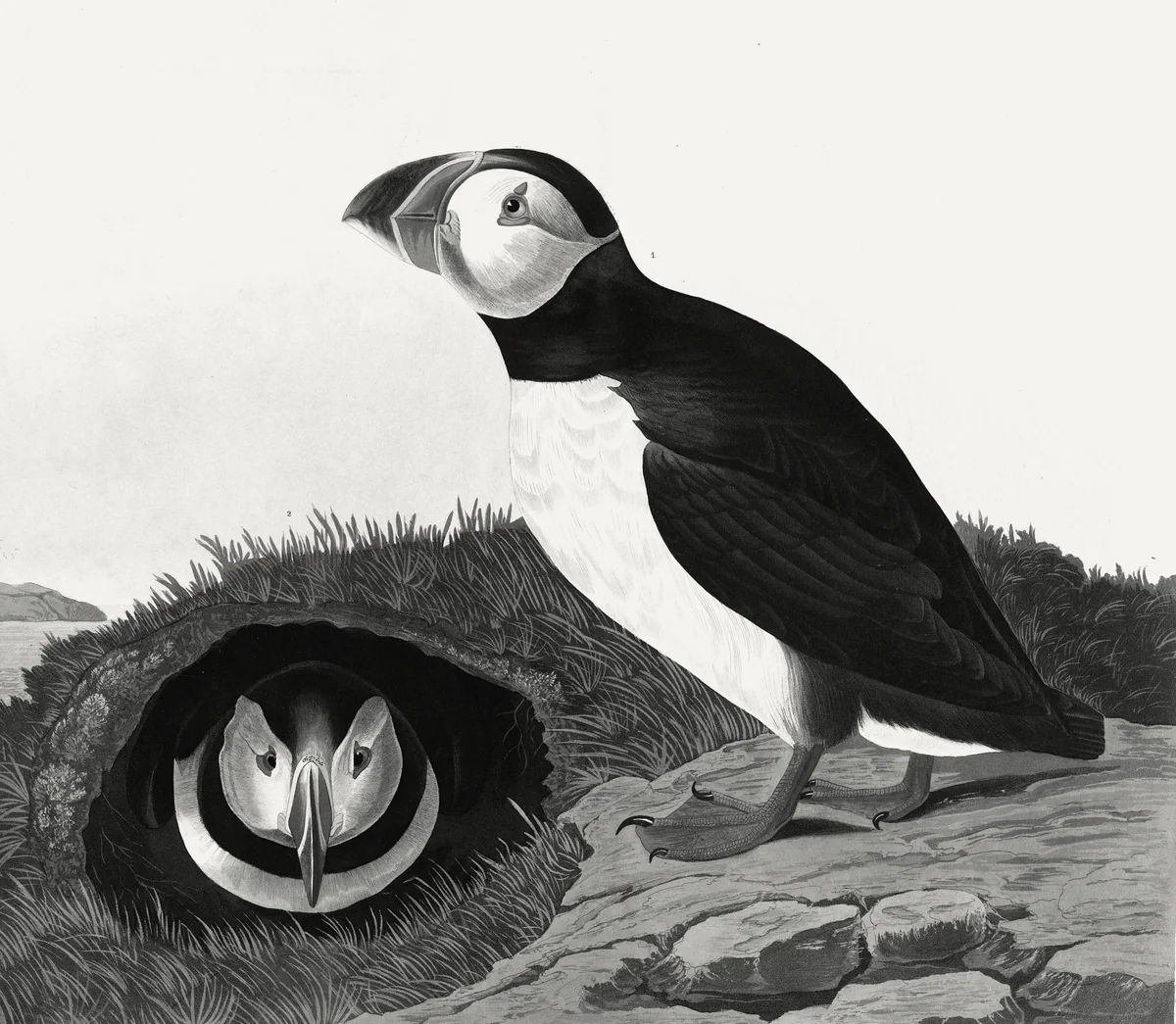
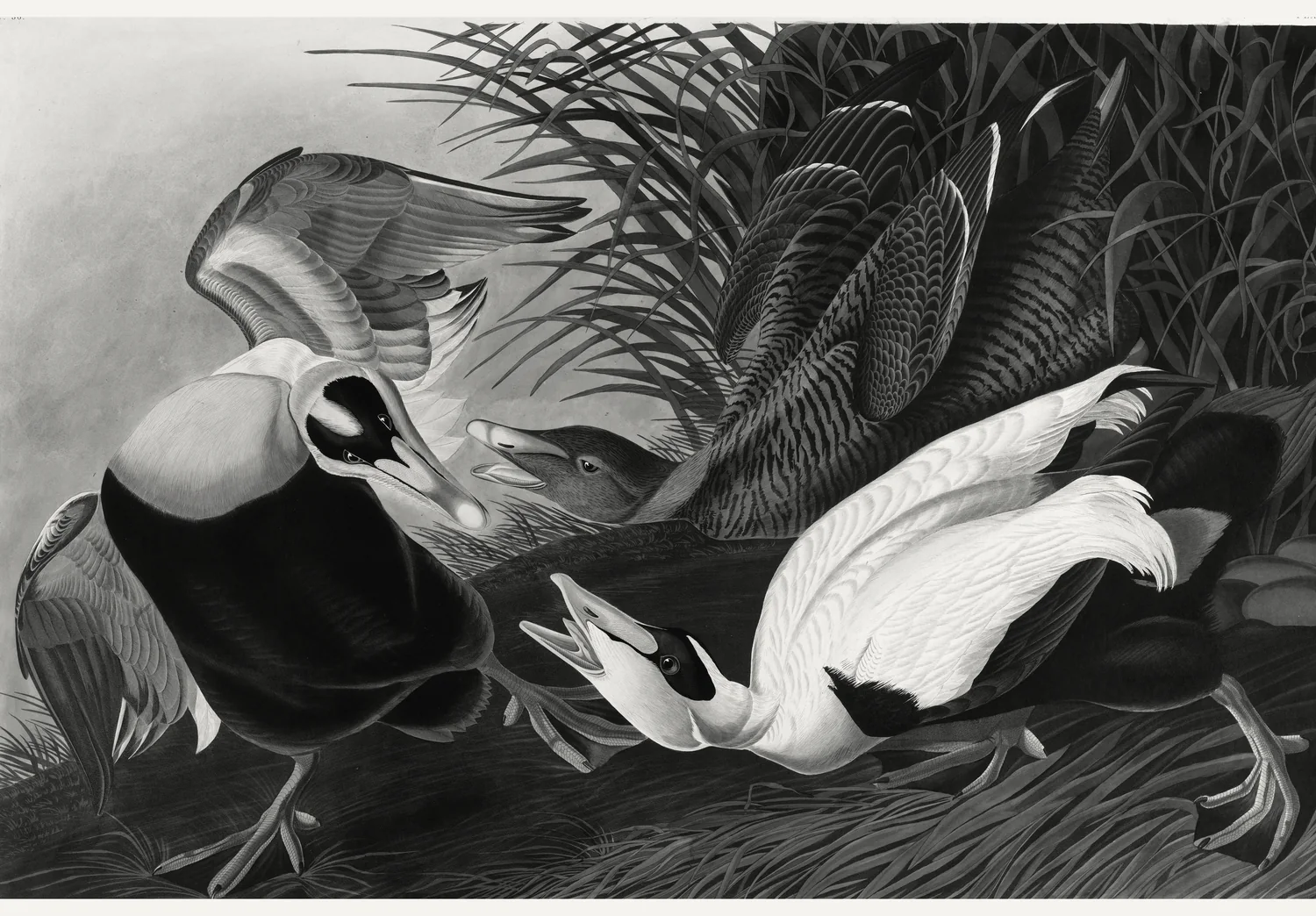
One effect has been counted. In the Brokey archipelago, nest counts kept by down-collecting families over 123 years show eider nests falling by about 60 per cent after mink arrived, a stronger effect than climate change. The rest is less certain. A ministerial answer to the Alþingi in 2021 said the effects of mink on prey have been little studied in Iceland, and that mink, together with the draining of wetlands, is thought to share in the loss of the water rail as a breeding bird.
Jónsson et al., 2023 · Alþingi, 2021Fur animals must by law always be kept in secure custody. In December 2022 Mosfellsbær reported unusually many mink in Reykjahverfi killing hens and pigeons, and said their look suggested they could be farmed mink escaped from a mink farm; it did not name the farm. MAST's letter to Dalsbú of April 2023 was headed, in part, Mink have escaped and welfare deficient
, Heimildin reported.
In the night before 29 July 2026 Dalsbú was broken into and cages were opened. The police said it was fairly clear that the farmer had not opened them, and that a person or persons unknown were believed responsible; the case is under investigation. No count was made of the mink killed or caught, the mayor of Mosfellsbær said, so how many got out is not known.
Police notice and mbl.is, 2026 · mbl.is, 2026From about 2000 traps set in water, which drown the mink, came into use; the state's animal-welfare council opposed them in 2003 and 2007, and the Environment Agency permitted them. A ministry committee wrote in 2013 that no research had been done on the death struggle of a mink caught in one. The Animal Welfare Act of 2013 kept them legal in organised mink control, if notified.
Stefánsson et al., 2016 · Ministry committee report, 2013 · Act 55/2013“Drowning traps for mink have been very controversial on animal-welfare grounds and the method is not considered consistent with the aim of the Animal Welfare Act.”
The draft removes the exception, so drowning any animal would be banned. In the same article it keeps, word for word except the agency's name, the rule that lets farmed fur animals be killed with engine exhaust in machines built for the purpose and approved by the state. The notes do not mention that rule. Fur animals appear in the draft only in article 23 and in article 14, which still names fur farming among the kinds of keeping the minister can make notifiable.
Draft Animal Welfare Act, 2026“Of course it is also on the table whether fur farming is something that should be banned and simply belongs to the past.”
“It is therefore clear that banning a particular kind of livestock farming requires Alþingi to legislate. There is no plan at present to table a bill banning fur farming.”
On 9 October RÚV reported that the minister was not aiming for a ban on fur farming in the new animal-welfare bill. In its comment on the bill's announcement in September, the Animal Protection Society of Iceland (DÍS) had drafted one: no keeping of fur animals for fur, existing keepers allowed to continue until 1 February 2028, and compensation for direct loss only. The draft of 20 November bans drowning, as the society proposed, and contains neither its ban on exhaust killing nor its ban on fur farming, by our comparison of the texts.
RÚV, 2026 · DÍS, 2026 · case S-240/2026MAST makes unannounced inspections of fur farms every other year, RÚV reported in March 2026. Although it has seen wounds, infections and poor conditions on mink farms, it has never reported one to the police.
MAST's chief veterinary officer told RÚV that police complaints had mostly been used when improvements could not be forced, because they proved drawn-out and were often dropped. Of daily fines she said: It seems that money matters to people.
MAST will be abolished on 1 January 2027 and its work will pass to Stofnun atvinnuveganna.
“What you're describing there, bone ends sticking out – that's just nonsense, it has never been here, never ever.”
The European Commission wrote in December 2023 that WelFur, built by the fur industry, does not assess welfare in absolute terms, it provides a methodology to rank farms within the current practice
; farms without it cannot sell through the international auction houses. An adviser at RML, the agricultural advisory centre, wrote in 2019 that the assessor as a rule never opens the cages, and that a farm scoring 55 points gets the label “Good current standard”. All six farms operating in 2025 had passed WelFur, RÚV reported.

RÚV's Kveikur broadcast images taken without the farmers' knowledge in October and November 2025, at three of the six mink farms then operating, by a Finnish photographer and two other Finnish animal-protection activists. RÚV wrote that they show animals that had started gnawing themselves to the bone, and a dead mink on a nest box among live animals; cage tags and video confirm where they were taken. None of the three farms is Dalsbú; all three closed about a month after the filming, for financial reasons.
Asked whether welfare had been breached, Björn Harðarson, whose farm was one of them, said: In some cases yes, they hadn't been taken out.
He and Bjarni Stefánsson said the WelFur method is scientifically researched.
“I think it is very hard in these conditions for mink to show their natural behaviour. […] But it is the government's decision what activity is permitted.”
The Icelandic Veterinary Association asked the government to take skýra afstöðu gegn loðdýrahaldi, a clear position against fur keeping, in its review of the rules, RÚV reported; the statement said 17 EU member states had banned fur farming or were working on a ban. The Animal Protection Society of Iceland called for a ban. Its chair had told RÚV the day before that two years between inspectors' visits is no check
.

The new journal Loðdýrarækt promotes mink for fishing towns as an animal that “eats almost only fish”. That autumn the first mink arrive from Norway.
Escaped mink are seen near the first farms. Guðmundur G. Bárðarson writes that it would be wisest to ban all import of mink; the journal Loðdýrarækt replies that he has upset the balance of people's ideas about animals.
Act No. 32/1951: “It is prohibited to erect new mink cages after this Act takes effect.” Existing cages may stand for 18 months, or five years in concrete houses. No mink are farmed from 1953 until 1969, according to a 2016 review.
The lower house shelves a bill to allow mink farming again, 21 to 13. Its supporter Ásberg Sigurðsson had called the danger of escape “so vanishingly small” that it was no valid argument.
Act No. 68/1969 passes, 14 to 4 and 21 to 11, requiring triple protection: cage, shed and outer fence. Its rapporteur, Sveinn Guðmundsson, had said the valid argument against it was the risk of escape, “and then disaster is certain”. Farming restarts in 1970.
The prime minister, Steingrímur Hermannsson, says over 200 fur farms have been established and their number is rising fast. The late-1980s peak was 240 by a government committee's later count, about 300 by Bændablaðið's.
Act No. 112/1989 guarantees up to ISK 300m of rescheduled fur-farm debt. In March 1991 the agriculture minister, Steingrímur J. Sigfússon, says about 120 fur farmers are left.
Valgerður Árnadóttir and five other MPs propose that all fur farming end before 1 January 2025. The resolution never reaches a first debate.
The five fur farms in South Iceland stop, for financial reasons by their owners' account, and pelt about 30,000 animals, Bændablaðið calculated. One farm is left: Dalsbú, in Mosfellsdalur.
Dalsbú is broken into in the night and cages are opened. Police are investigating; on 26 October they said no one was suspected.
The Ministry of Industries publishes a draft Animal Welfare Act. It bans drowning wild mink, keeps exhaust killing for fur animals and contains no ban on fur farming.
Comments close on 4 December 2026 at 23:59. The draft has not yet been tabled in the Alþingi.
Loðdýrarækt, 1931 · Náttúrufræðingurinn, 1932 · Alþingi records, 1948–2022 · +5The Fur Free Alliance lists 24 European countries and territories that have legislated to end fur farming, in full or in part. Poland, Europe's largest producer, joined the list on 2 December 2025. Five of the bans are not yet in force.
The list counts Guernsey, a Crown Dependency; France, which banned only non-domestic species; and Romania, which banned mink and chinchilla from 2027. Counting only sovereign states with a law that bans all fur species gives 20, or 21 with the all-species ban Bulgaria's parliament passed on 13 November 2026, by our count, from the national texts where we could read them and the Fur Free Alliance otherwise.
Fur Free Alliance, 2026 · Eurogroup for Animals, 2025 · national textsFur Free Europe, a citizens' initiative, handed the European Commission 1,502,319 verified signatures in June 2023. The Commission said it would say by March 2026 whether it considered a ban appropriate; by 25 November 2026 it had not, and Rapporteur reported a reply expected on 9 December. The EU has listed the American mink as an invasive alien species, applying from 7 August 2027; there is no evidence that the listing applies in Iceland. World supply of mink pelts fell from 94.7 million in 2015 to 13.4 million in 2024, by the Finnish breeders' association's count. Saga Furs reported that at its March 2026 auction it sold all 3.1 million mink pelts offered, at average prices 76 per cent above June 2025.
ECI register · European Commission, 2023 · Rapporteur, 2026 · +3| Country | Law | Ban in force | Scope | Compensation |
|---|---|---|---|---|
| Austria | 2004 | 1 Jan 2005 | all fur animals | none in the Act |
| Belgium | Flanders 2019; Wallonia 2015; Brussels 2017 or 2018 | Flanders 1 Dec 2023 | all | Flanders: yes, falling 10% a year; total not found |
| Bosnia and Herzegovina | 2009 | 2028, not yet | all | none, per FFA |
| Bulgaria | 2022 order; all-species ban passed by parliament 13 Nov 2026 | 2022 order; 2026 ban not known | 2022: American mink; 2026: all | none, per FFA |
| Croatia | 2006 | 1 Jan 2017 | all | not found |
| Czechia | 2017 | 31 Jan 2019 | all | capped at average annual net profit |
| Estonia | 2021 | 1 Jan 2026 (end of transition for existing mink and raccoon-dog farms) | all | not found |
| France | 2021 | 2 Dec 2021 | non-domestic species only | not found |
| Ireland | 2022 | 9 Dec 2022 | all | about €3.4m paid by Oct 2025 |
| Italy | 2021 | keeping ended 30 Jun 2022 | all | €3m a year fund, 2022–23 |
| Latvia | 2022 | 1 Jan 2028, not yet | all | not found |
| Lithuania | 2023 | 2027, not yet | all | €3, €2 or €1 an animal by year of closure |
| Luxembourg | 2018 | 2018 | all | not found; no farms |
| Malta | 2022 | 2022 | all | not found; no farms |
| Netherlands | 2013, brought forward 2020 | 8 Jan 2021 | all | about €150m, plus €33.7m other items |
| North Macedonia | 2014 | 2014 | all | not found |
| Norway | 2019 | keeping ended 1 Feb 2025 | all | nearly NOK 1.64bn paid by Sep 2024 |
| Poland | 2025 | new farms from the Act's entry into force; existing 31 Dec 2033, not yet | all except rabbit | 25% falling to 5% of average annual fur revenue |
| Romania | 2024 | 1 Jan 2027, not yet | mink and chinchilla | not found |
| Serbia | 2009 | 1 Jan 2019 | all | not found |
| Slovakia | 2019 | 31 Dec 2025 | all | none in the Act |
| Slovenia | 2013 | 2015 | all | not found |
| United Kingdom | England and Wales 2000; Scotland and Northern Ireland 2002 | 1 Jan 2003 in Great Britain | all | statutory scheme; total not found |
| Guernsey (Crown Dependency) | 2024, per FFA | 2024 | not checked | not checked |
| Denmark (not on the list) | fox 2009; raccoon dog 2011 | mink to end by 2029 at the latest | fox; new raccoon-dog holdings | 2020 mink cull: about DKK 29.1–29.2bn, estimate |
| Sweden (not on the list) | inquiry SOU 2026:29 proposes a ban from 1 Jul 2027; no bill | – | – | SEK 180m voluntary closure aid, 2024 |
| Finland (not on the list) | no ban | – | – | – |
| Iceland (not on the list) | no ban; the draft Act of 20 Nov 2026 contains none | – | – | – |
Year of law and date in force from the national texts where read, otherwise from the Fur Free Alliance. “Not found”: no figure in the sources read.
Article 23 of the draft, on killing: No drowning. No exhaust, except for fur animals.
— days left to comment · closes 4 December 2026, 23:59
Dalsbú, Mosfellsdalur
A house at Iceland's last mink farm, drawn from published photographs. The light and the weather are the farm's, now.