Thirty by Seventy.

An independent investigation · Iceland — Smallest cage the law allows, cm
Hand-coloured lithograph of two mink by a forest stream: one on a fallen log looking up, one crouched on a rock with its teeth bared; a waterfall and a log cabin behind.
Mink, male and female, natural size, by John James Audubon (Philadelphia, 1844). The first mink reached Iceland in the autumn of 1931, from Norway · Missouri Historical Society, public domain, cropped and tonedScroll ↓
Comments on the bill close 4 December The investigation ÍslenskaThe draft bill, 20 November 2026 →

In mink houses built before early 2015, Icelandic law sets the smallest cage at 30 by 70 centimetres; in newer houses, 30 by 90. One farm still keeps mink. The draft Animal Welfare Act, open for comment until 4 December 2026, leaves the rules and the farm in place.

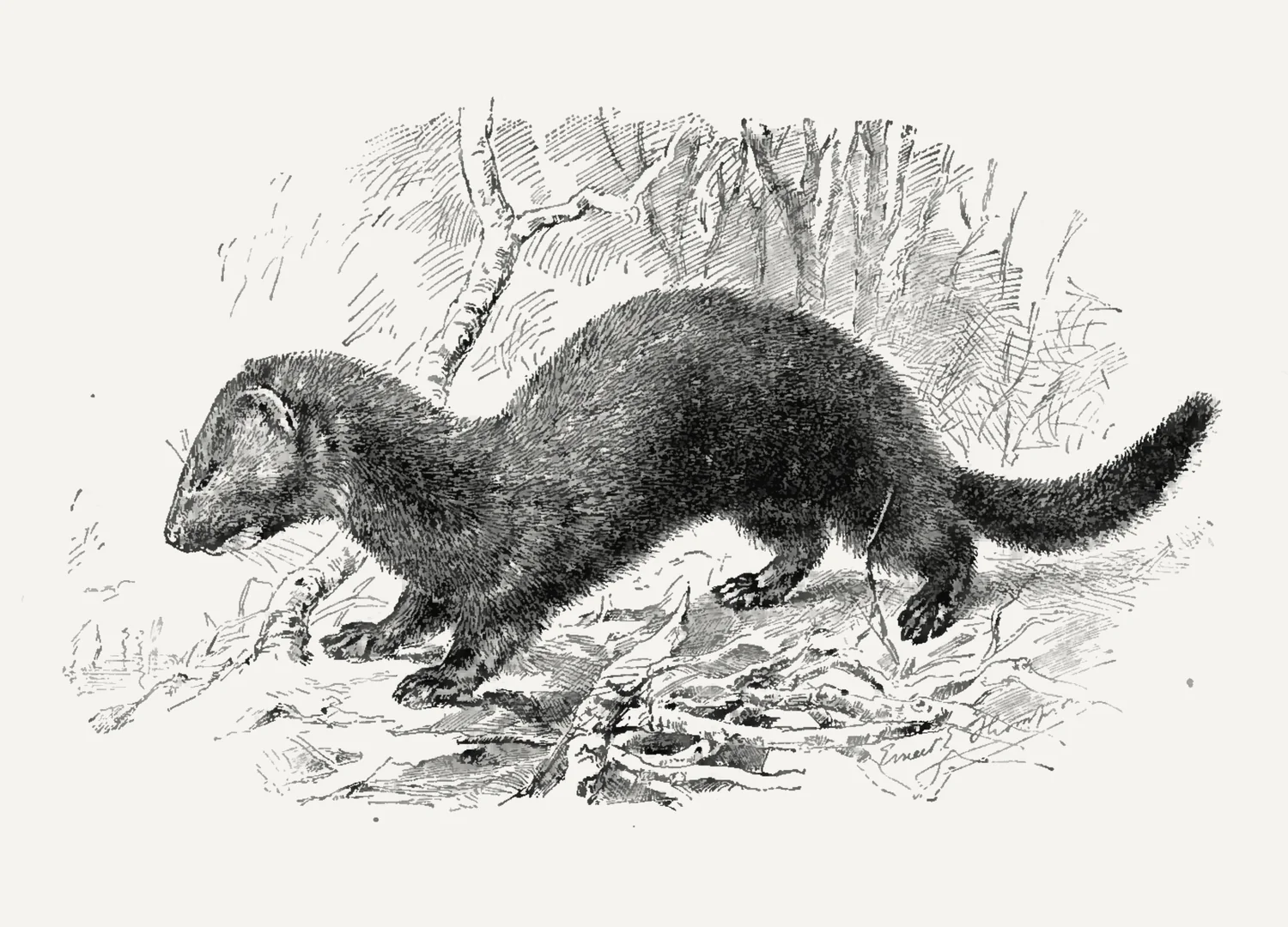
Pen drawing of a mink walking left over sticks and leaves, with bare saplings behind.
Ernest Thompson Seton, 1888
One mink, one yearRegulation 1277/2014, in force since early 2015
February–April
Checked once a day · one to a cage

Mating. In the wild mink mate from February to April, most in March, Iceland's Natural Science Institute says; no Icelandic source gives the dates on farms. Starving the animals is banned, but body condition may be controlled by feeding for a short time before mating.

20 April
Three times a day · the female with its kits

Checks rise to three a day until 19 July. In the wild most kits are born in the first half of May, six or seven to a litter on average. Bændablaðið reported about 6,000 females and 24,000 to 25,000 kits on the five southern farms in their last season, about four a female by our division.

Week 7
Three times a day · one to a cage

Weaning may not come before seven weeks unless the kits' or the female's health or welfare requires it. From then the regulation calls them juveniles, until 30 weeks, and allows one to a cage. EFSA, the EU's food-safety authority, writes that stereotypic behaviour, mainly pacing back and forth, typically begins at weaning, is not seen in the wild and is not fully fixed in form until seven months of age.

20 July
Twice a day · two juveniles to a cage

Checks fall to twice a day. Until 15 December two juveniles may share one cage of the minimum size, and more at set times, never more than four, with 850 cm² added for each beyond two. EFSA found that wounds could be substantially reduced if juveniles were kept in male–female pairs until about September or October, then alone, and each had enough resources, for which standard cages may lack room.

November–December
Pelting · about six to seven months old

Pelting, in the regulation's words, is seasonal work: killing the mink, skinning them and processing the skins. Killing must be done out of sight of other animals, in purpose-made killing boxes. Kits born from late April are about six to seven months old by now, by our reading of the regulation's dates; no Icelandic source states the age.

15 December
Once a day · one to a cage

Checks fall to once a day “from 15 December or once pelting is finished” until 19 April, and the two-to-a-cage allowance ends. In early December 2025, as the five southern farms closed, the chair of the fur farmers' branch, Björn Harðarson, told Bændablaðið: Við erum að pelsa allt niður, “We are pelting everything down.”

In December 2025 the five farms in South Iceland pelted about 30,000 mink, by Bændablaðið's reckoning, and stopped. One farm kept its mink.

Regulation 1277/2014 · Natural Science Institute of Iceland · EFSA, 2025 · +1
Act I · The Animal

A Solitary Swimmer.

The American mink, by Iceland's Natural Science Institute

Iceland's Natural Science Institute describes the mink as a skilled swimmer that dives for prey in fresh water and the sea. Its territories are often long and narrow, along a shore or a riverbank. Adult mink are solitary and avoid other mink, except in the mating season.

EFSA set the two spaces side by side in 2025: in the wild a territory may extend to one square kilometre; a standard cage gives a mink 0.21 to 0.28 square metres, plus the nest box. Iceland's minimums, 0.21 and 0.27 square metres, fall within the cage dimensions EFSA assessed, by our comparison.

Natural Science Institute of Iceland · EFSA, 2025 · Regulation 1277/2014
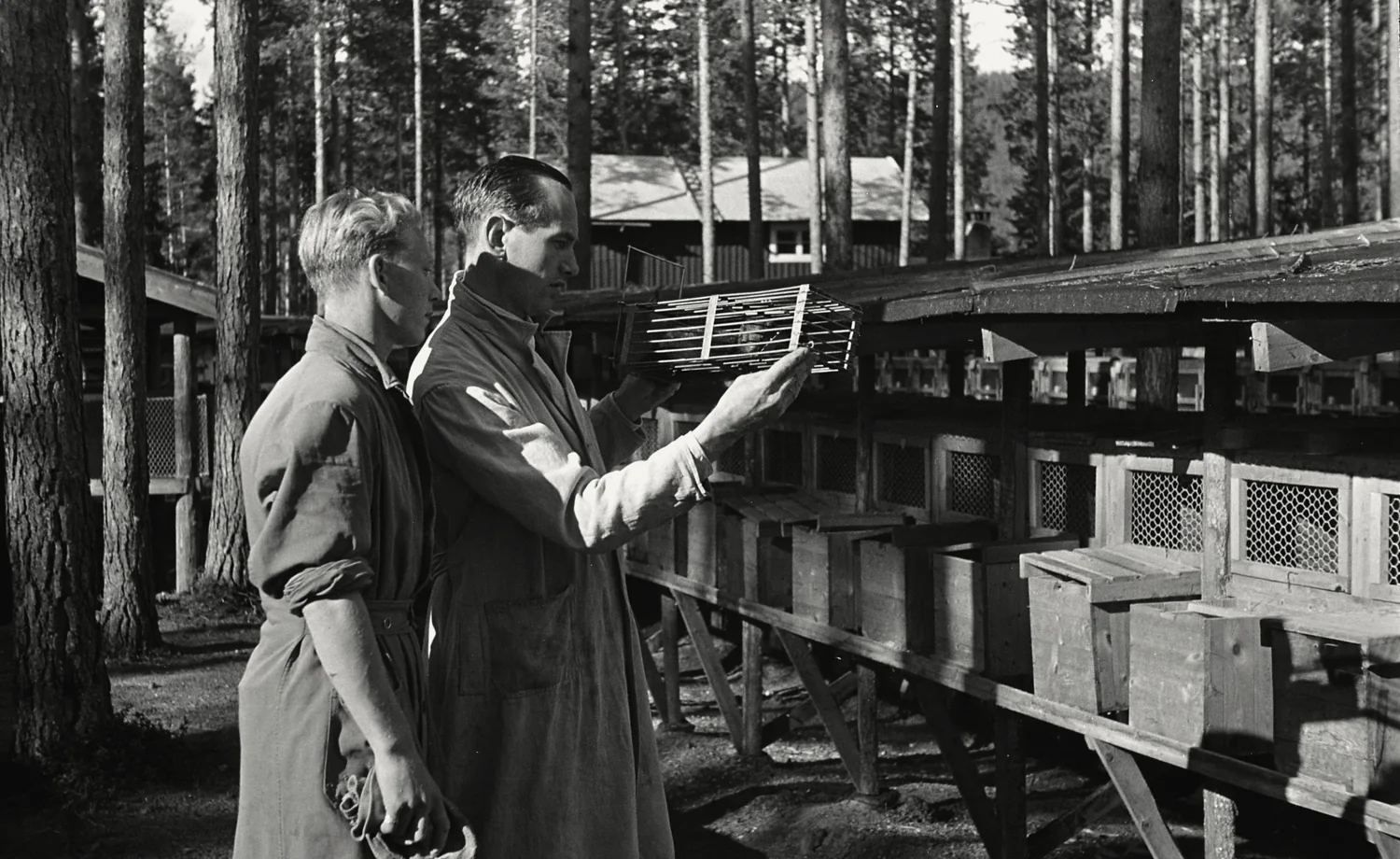
Black-and-white photograph: two men in work coats hold up a small wire cage; rows of raised wire cages with wooden nest boxes stand behind them in a pine forest.
Mink cage, Norway, 1942 · Anders Beer Wilse
EFSA, 30 July 2025

The EU's food-safety authority assessed mink, foxes, raccoon dogs and chinchillas kept for fur, in the cage systems in use; killing was outside its brief. For every species it ranked three welfare problems as the most relevant: restriction of movement, the inability to explore or forage, and too little or too much stimulation of the senses, all linked to cage size and barrenness. Its conclusion: In the majority of cases, it is concluded that neither prevention nor substantial mitigation of the identified WCs is possible in the current system. WCs are welfare consequences. For mink, restriction of movement cannot be prevented or substantially mitigated in the current system.

EFSA, 2025
Water, in one experiment

In a study published in Nature in 2001, Mason, Cooper and Clarebrough let 16 adult mink reach several resources through weighted doors. As EFSA summarises it, the mink pushed as much weight to reach open water as to reach food, and blocking the water raised their cortisol by about a third, against about half when food was blocked. EFSA also reports studies that found no difference, writes that mink do not swim every day, and says it is unclear whether these behaviours are specific needs. For the cage it wrote: In the current system, the available space is not enough to allow the addition of open water resources.

Mason et al., 2001
Mink on Icelandic farms
86,600
Mink in Statistics Iceland's livestock count for 1988, the highest in its table. The table does not define the count; its 2018 figure matches MAST's autumn count.
33,260
Mated females on 21 farms in 2010, by MAST's count.
7,600
Mink on six farms at the end of 2023, MAST's figure, given to the Alþingi by the food minister. No other fur animals were farmed.
2,300
Breeding females at Dalsbú, the last farm, Bændablaðið reported in December 2025. In July 2026 mbl.is put the number of mink on the farm at about 10,000 to 12,000.
Statistics Iceland · MAST, 2010 · Alþingi, 2024 · +2
One mark for each fur farm at the late-1980s peak
Fox and mink farms, 240 by a government committee's count in 2003; other sources give about 280 to 300. Marks are counts, not the same farms: at least one of the five that closed in 2025 started after the peak.
Gone by the end of 2023, net · 234Closed in December 2025 · 5Still keeping mink · 1
Agriculture ministry committee, 2003 · MAST, 2024 · Bændablaðið, 2025
The cageRegulation 1277/2014 · in force since early 2015

“Move unhindered, stand on their hind legs …”

Regulation 1277/2014, article 7: what a cage must allow. Our translation
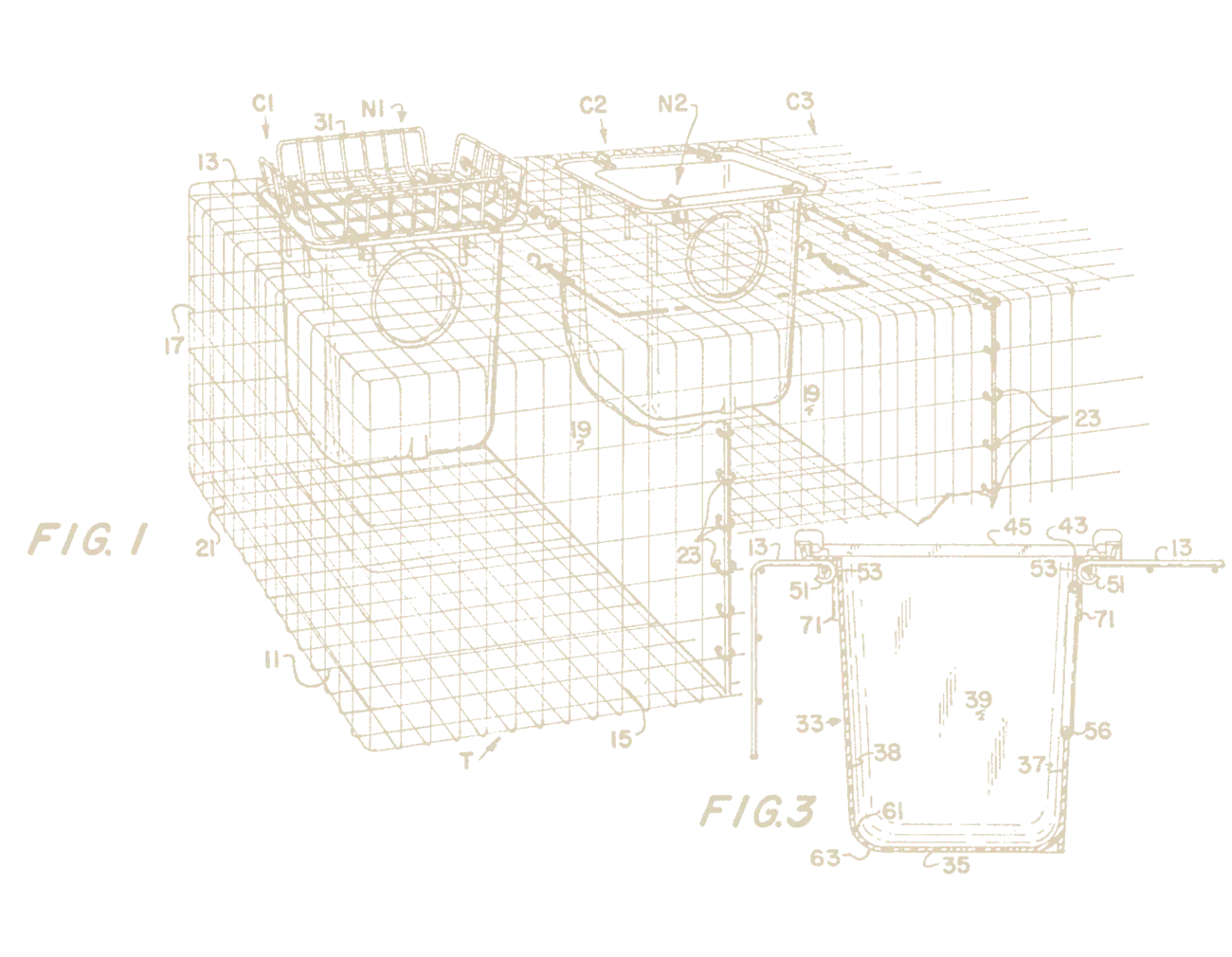
Line drawing of a row of welded-wire mink cages with drop-in nest boxes, and a cross-section of a nest box.
Mink cages, US patent, 1968

In houses built before early 2015 the smallest cage is 30 by 70 centimetres, about 3.4 sheets of A4 paper.

In houses built since, it is 30 by 90, or 2,700 square centimetres. Both must be 45 centimetres high, and the nest box does not count toward the floor. A female keeps the same floor with its kits until they are weaned. Which Icelandic houses fall under which rule is not public.

Article 7 asks that a caged mink can show “as natural and varied behaviour as possible”. EFSA: The length of the standard cages restricts the forward movement of mink […]. The animals will run back and forth, which may develop into stereotypic pacing.

Regulation 1277/2014 · EFSA, 2025
What Regulation 1277/2014 requires

Signed by the fisheries and agriculture minister, Sigurður Ingi Jóhannsson, on 18 December 2014. Eight of its rules:

  • 1A floor of at least 2,100 cm², or 2,700 cm² in houses built since early 2015; the nest box not counted
  • 2At least 30 cm wide, 70 or 90 cm long and 45 cm high
  • 3One animal to a cage after weaning, except to mate; two juveniles from 20 July to 15 December; never more than four
  • 4Tubes, blocks, balls or shelves always to hand, straw alone not enough, except in top-cylinder cages, where the nest box sits on top of or in the back of the cage
  • 5A dry nest box insulated with hay or straw, large enough for all the animals to lie down at once
  • 6Floor wire at least 2.4 mm thick, mesh no larger than 2.54 by 3.81 cm
  • 7Paralysed animals and animals with fractures killed at once; animals with deep wounds, wounds wider than 2.54 cm, or wounds reaching an eye or the bone, killed
  • 8Mink always in animal-proof cages in animal-proof houses, behind two self-closing doors never both open
Regulation 1277/2014
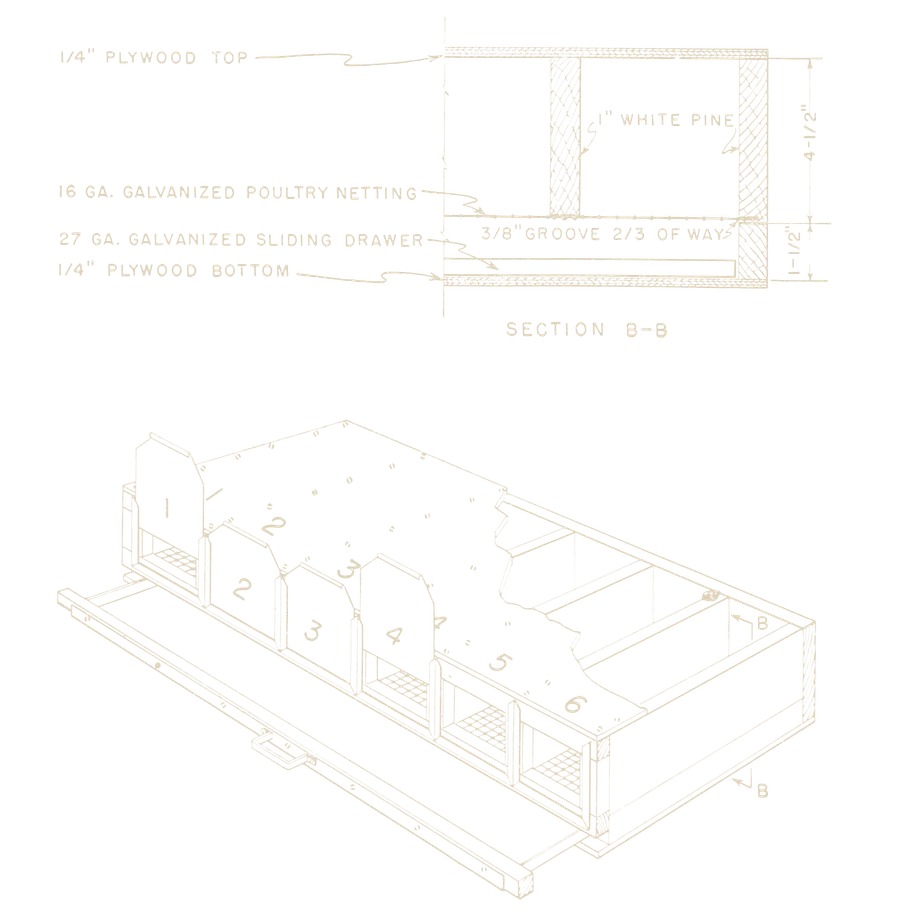
Cut-away line drawing of a plywood box divided into six numbered compartments, with a wire-mesh floor and a sliding drawer, beside a measured cross-section.
Mink killing box, USDA, 1948

Iceland bans killing animals with engine exhaust, except fur animals.

The Animal Welfare Act of 2013 allows it in machines specially designed and made for killing fur animals, if MAST, the food and veterinary authority, has approved them. No official source we found states which method Icelandic farms use or whether MAST has approved a machine. The Animal Protection Society of Iceland says the animals are killed with carbon monoxide.

The measurements come from laboratories abroad, reviewed by Canada's National Farm Animal Care Council in 2012. Mink in pure carbon dioxide lost consciousness after about 19 seconds and died after about two and a half minutes; in 4 per cent carbon monoxide they lost it after about a minute and died after about three and a half. Offered a chamber of 80 per cent carbon dioxide, one of eight mink went in, and retreated at once. The UK's Animal Welfare Committee found in February 2026 no evidence that killing is audited under the existing welfare protocols for farmed fur.

Act 55/2013 · DÍS, 2026 · NFACC review, 2012 · +1

Act II · The Money

Ten Losses, Eleven Years.

Iceland's fur farms, 2014 to 2024, by Statistics Iceland

Statistics Iceland publishes accounts for every entity classed as a fur farm. They made a profit every year from 2009 to 2013; in 2013 revenue peaked at ISK 2,285m and net profit at ISK 508m. From 2014 they made a net loss every year to 2024 except 2021.

Net results from 2014 to 2024 add up to a loss of ISK 1,418m, by our sum. Equity has been negative every year since 2018; in 2024 debt of ISK 1,054m exceeded assets of ISK 888m. Statistics Iceland has published none for 2025 yet.

Statistics Iceland, 2008–2024
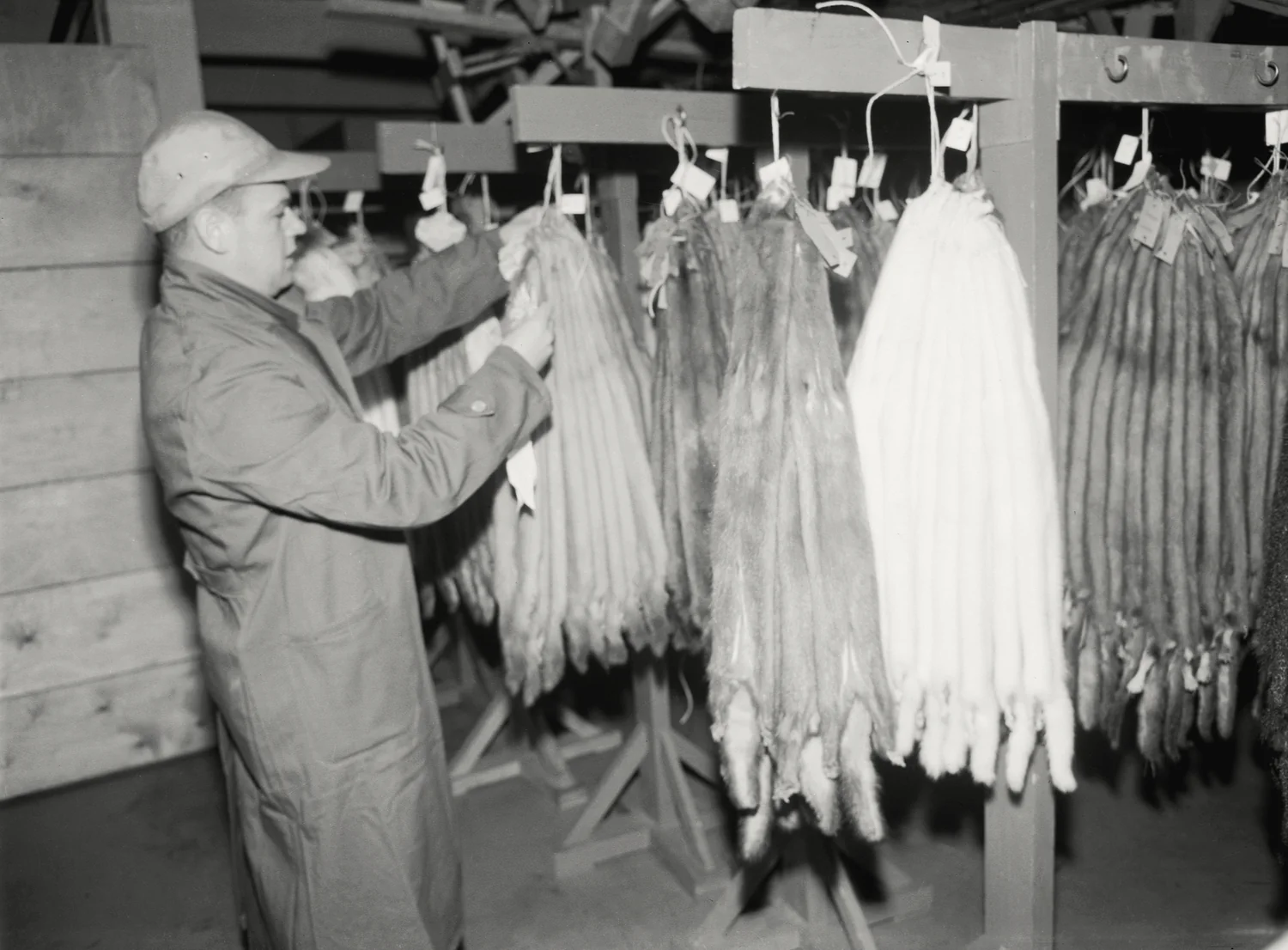
Black-and-white photograph of long rows of hanging mink pelts, white and dark, in a warehouse, with a man tagging furs among them.
Mink pelts, Finland, 1960 · Erkki Voutilainen, CC BY 4.0
Skatturinn company register · Bændablaðið, 2025 · Statistics Iceland · +2
2008–2024
Profits 2009–2013, losses in ten of eleven years since
Revenue and net profit or loss of every entity classed as a fur farm, ISK million, in money of each year.
RevenueNet profit or loss
ISK−1,418 mNet results 2014–2024, added up. The one profit: ISK 97m in 2021.
Statistics Iceland
Raw mink skins exported from Iceland, declared value
ISK1,990.6 m2013
ISK189.7 m2025

In 2013 Iceland exported 192,426 skins, all to Denmark; in 2025, 42,877, all but one to Finland. The 2025 value was under a tenth of 2013's, in money of each year, by our division.

Statistics Iceland
The money, by the skin
ISK 8,500
Production cost of a skin in 2023, about ISK 8,500, against an average price of about ISK 4,000, Bændablaðið reported in December 2025, without naming its source.
80–100
Work-years in fur farming in 2003, almost all rural. Bændablaðið estimated that two to three jobs could be lost on each of the five farms, more counting the skinning, and two to three at the feed mill.
Bændablaðið, 2025 · agriculture ministry committee, 2003
December 2025, the farmers in their words

Björn Harðarson of Holt I told Bændablaðið on 4 December: We are five fur farmers in South Iceland who are stopping. It's for financial reasons, you could say; it just doesn't add up any more. The next day the paper reported that the jointly owned feed mill at Selfoss, which made feed for five of the six farms, had closed. Bjarni Stefánsson of Tún I, 34 years in fur: It came rather suddenly, because others were stopping, so the feed mill had no basis and it has closed. Otherwise I'd have carried on for a while.

At Dalsbú, which makes its feed on the farm, Ásgeir Pétursson said: All I know is that we carry on.

Bændablaðið, 2025
The accounts year by year
YearRevenue, ISK mNet profit or loss, ISK mNote
2008775−433Financial items ISK −671m that year
200982899
20101,205322
20111,380338
20121,895500
20132,285508Peak revenue and peak profit
20141,414−195
20151,494−107
2016873−240
2017749−270
2018561−369The largest loss after 2013; equity negative every year from 2018
2019439−39
2020289−122
202156297The one profit after 2013
2022460−93
2023584−68
2024476−12Latest year; no figures for 2025 yet

Statistics Iceland counts every entity that files as a fur farm, 46 in 2013 and 28 in 2024, which can include some with no revenue, and classes mixed farms by their largest income. Revenue was higher than the value of skin exports in most years since 2010, but not in 2016 or 2017. The series has been revised since March 2019, and the figures for 2017 in that release differ.

Public support, 1985–2021
YearMeasureISK, money of the yearSource
to early 1987Loans to fur farms and feed mills from Stofnlánadeild, Byggðasjóður and Byggðastofnun, most of them in 1985about 500mByggðastofnun, 1987
to summer 1986Grants from the Agricultural Productivity Fund: 30% of investment, up to 500,000 a farmer; 96 farmers starting new branches, most in furnot totalledByggðastofnun, 1987
to mid-1985Grants under the Land Cultivation Act18.8mMP's speech, June 1985 (excerpt)
1988Sales tax refunded35mAgriculture minister, 1991
Feb 1989Borrowing authorised to restructure fur farms60mAlþingi speech
1989Debt-restructuring grant, Agricultural Productivity Fund60mAgriculture minister, 1991
autumn 1989Sales tax refunded41msame
1989–1991State guarantees for rescheduled debt, Act 112/1989about 200m used of 300msame; Act 112/1989
1990Feed-price equalisation, Agricultural Productivity Fund37msame
1990Feed equalisation, Treasury37msame
1990Fox subsidy30msame
1990To Byggðastofnun for feed centres; to Bjargráðasjóður25m; 11msame
1991Feed equalisation, estimate32.5msame
1992Act 108/1992: up to half of fur-farm debts may be written offnot publishedAct 108/1992
2001–2003Feed subsidies45m, 30m, 15mministry committee, 2003
2020Three ministries 10m each (paid); 50m proposed in the supplementary budget; to go through the feed mills80m, 50m of it proposedþskj. 530; Bændablaðið
2021Budget committee majority, for an “environmental agreement” with mink farmers80m proposed; payment not confirmedþskj. 530

Byggðastofnun wrote in January 1987 that no business now being built up in Iceland enjoys as much public support as the feed mills. The budget papers tie the 2020–2021 money to using mink farming to dispose of food producers' organic waste; the farmers' association had asked for help because of Covid. We found no figure for the sums written off under the Acts of 1989 and 1992, and no total.


Act III · Nature

Mink Loose Since 1932.

Escaped mink, first seen near the first farms

The first mink reached Iceland in the autumn of 1931, bought in Norway for farms in the south-west. Escaped mink were seen near those farms in 1932, and the first wild den was found near Reykjavík in 1937. By about 1975 they held lowland all over the country.

In 1932 the naturalist Guðmundur G. Bárðarson wrote that if mink were raised widely, it could be taken as certain that some would escape and go wild, and that it would be wisest to ban all import of mink. The state now calls the mink an invasive alien species. Its numbers are unknown; they have never been counted nationwide.

Natural Science Institute · Stefánsson et al., 2016 · Náttúrufræðingurinn, 1932 · +1
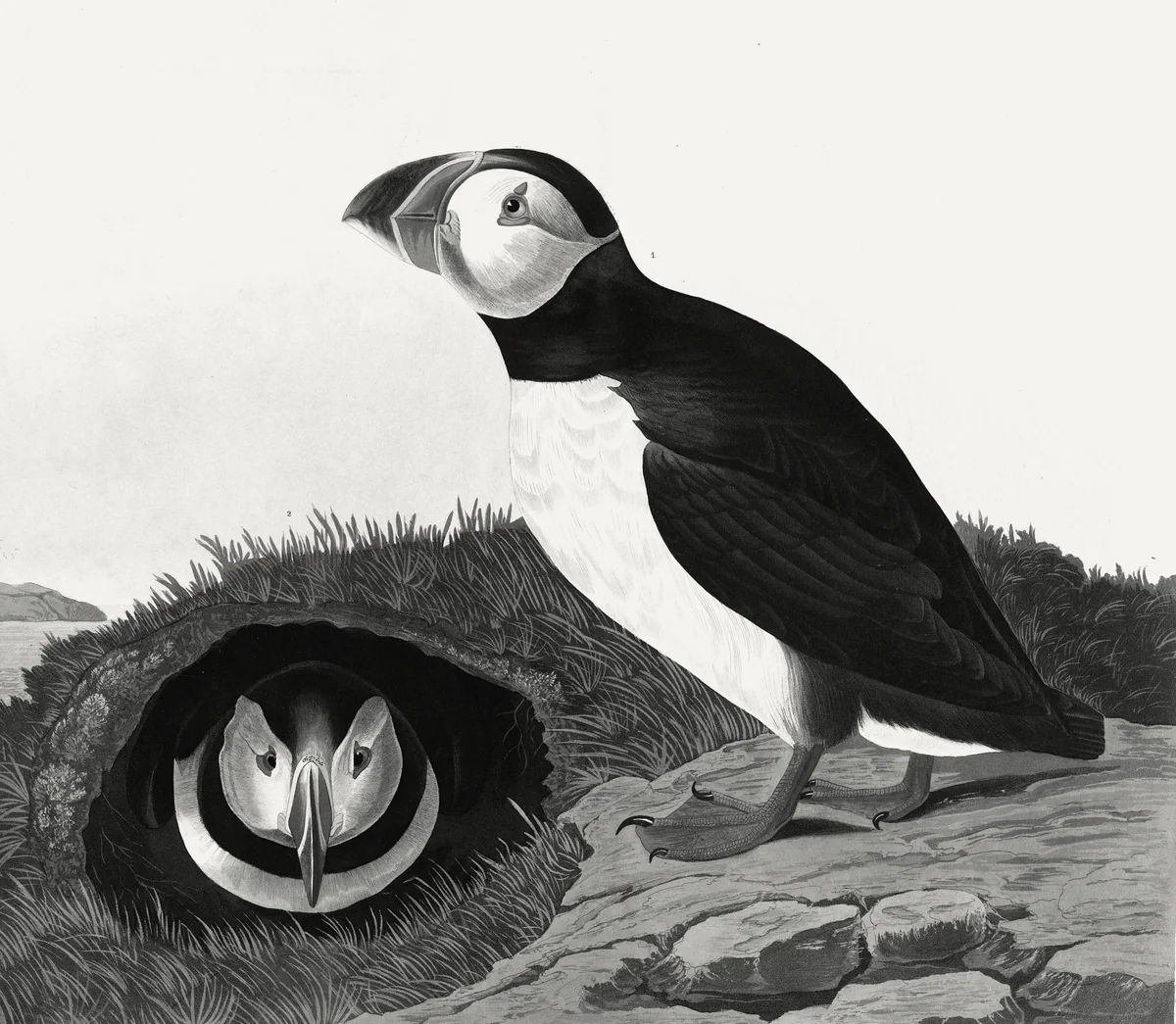
Hand-coloured engraving of a puffin standing on a grassy cliff top while another looks out of its burrow.
Puffin · John James Audubon, 1834
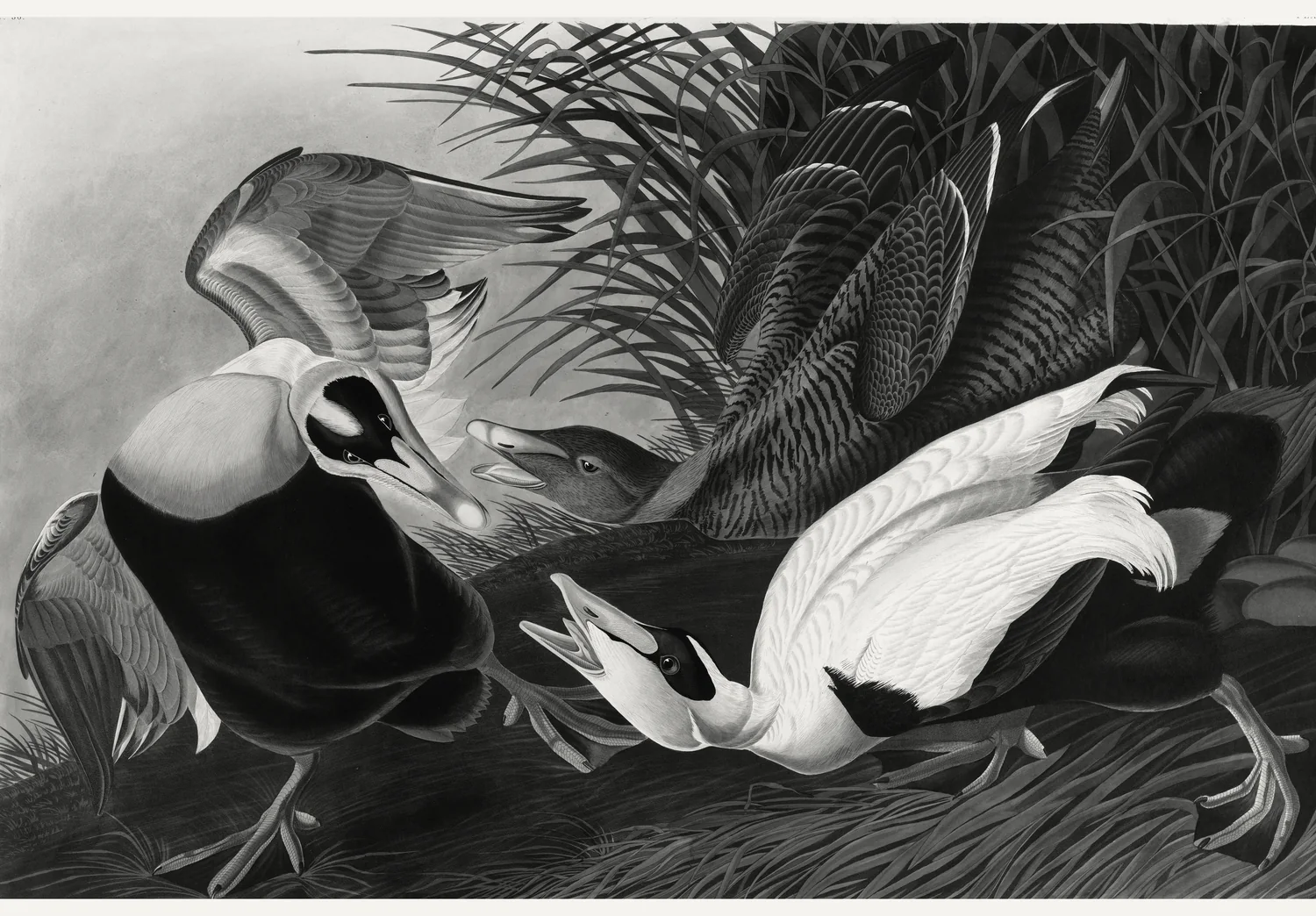
Hand-coloured engraving of two eider drakes and a brown female duck among sedge.
Eider · John James Audubon, 1835
1998–2023
Mink killed fell by two-thirds from 2002 to 2015
Wild mink killed a year, from hunters' returns, whole country. Hunters without a hunting card need not report.
Mink killed2023, the latest yearProbably two years, 2004
3,597Mink killed in 2023, the latest year published. The low was 2,734 in 2015.
Náttúruverndarstofnun, 1998–2023
Who pays for the hunt
ISK 1.4 bn
Spent by the state and municipalities on mink hunting from 1989 to 2011, just under that at 2013 prices, a ministry committee reported. No attempt had been made, it wrote, to assess how well the hunting reduced damage.
ISK 3,000
The reference bounty for a mink, paid against its tail, and ISK 15,000 for a pregnant female. The bounty was already ISK 3,000 in 2016.
ISK 53.7 m
The state's 2023 reimbursement to municipalities for hunting fox and mink, one budget line for both. Fox took ISK 27.1m of it, leaving about ISK 26.6m for mink, by our subtraction; no split is published. The state pays up to half of the municipalities' costs.
Ministry committee report, 2013 · Environment Agency · Stefánsson et al., 2016 · +3
The eradication trial, 2007–2009

A ministry-funded trial set out to eradicate mink from Eyjafjörður and Snæfellsnes, 5,200 square kilometres, with hunting effort raised 2.7 to 5 times. Beyond a decline already under way, the extra hunting cut mink numbers by 34 per cent on Snæfellsnes and 49 per cent in Eyjafjörður, the evaluators found, and eradicated none. They judged nationwide eradication by more hunting of uncertain realism and very costly. A ministry committee wrote in 2013: One of the prerequisites of eradication would be a ban on mink farming. Iceland's Natural Science Institute says it is likely that as long as mink are imported for fur farming, they will keep escaping.

Environment Agency, 2009 · Stefánsson, 2012 · ministry committee, 2013 · +1
Eiders and other birds

One effect has been counted. In the Brokey archipelago, nest counts kept by down-collecting families over 123 years show eider nests falling by about 60 per cent after mink arrived, a stronger effect than climate change. The rest is less certain. A ministerial answer to the Alþingi in 2021 said the effects of mink on prey have been little studied in Iceland, and that mink, together with the draining of wetlands, is thought to share in the loss of the water rail as a breeding bird.

Jónsson et al., 2023 · Alþingi, 2021
Escapes before 2026

Fur animals must by law always be kept in secure custody. In December 2022 Mosfellsbær reported unusually many mink in Reykjahverfi killing hens and pigeons, and said their look suggested they could be farmed mink escaped from a mink farm; it did not name the farm. MAST's letter to Dalsbú of April 2023 was headed, in part, Mink have escaped and welfare deficient, Heimildin reported.

Act 38/2013 · Mosfellsbær, 2022 · Heimildin, 2023
29 July 2026

In the night before 29 July 2026 Dalsbú was broken into and cages were opened. The police said it was fairly clear that the farmer had not opened them, and that a person or persons unknown were believed responsible; the case is under investigation. No count was made of the mink killed or caught, the mayor of Mosfellsbær said, so how many got out is not known.

Police notice and mbl.is, 2026 · mbl.is, 2026
Drowning traps

From about 2000 traps set in water, which drown the mink, came into use; the state's animal-welfare council opposed them in 2003 and 2007, and the Environment Agency permitted them. A ministry committee wrote in 2013 that no research had been done on the death struggle of a mink caught in one. The Animal Welfare Act of 2013 kept them legal in organised mink control, if notified.

Stefánsson et al., 2016 · Ministry committee report, 2013 · Act 55/2013
20 November 2026 Case S-240/2026
The Ministry of Industries, notes to the draft Animal Welfare Act, 20 November 2026 · ekki talin samræmast
“Drowning traps for mink have been very controversial on animal-welfare grounds and the method is not considered consistent with the aim of the Animal Welfare Act.”

The draft removes the exception, so drowning any animal would be banned. In the same article it keeps, word for word except the agency's name, the rule that lets farmed fur animals be killed with engine exhaust in machines built for the purpose and approved by the state. The notes do not mention that rule. Fur animals appear in the draft only in article 23 and in article 14, which still names fur farming among the kinds of keeping the minister can make notifiable.

Draft Animal Welfare Act, 2026
The draft, article by article
Art. 1
The aim adds respect for animals as sentient beings. The aim that animals can show their natural behaviour “as far as possible” is unchanged.
Art. 4
New: animals are sentient beings that experience pain and suffering, and doubt shall be interpreted in their favour.
Art. 8
New: the keeper shall strive to enable animals to show their natural behaviour as far as possible.
Art. 14
Fur farming is still named among the kinds of keeping the minister can make notifiable. Nothing in the draft bans it.
Art. 23
Killing by drowning is banned, with no exception. Killing with engine exhaust is banned except for fur animals, in machines approved by Stofnun atvinnuveganna, the agency that takes over MAST's work on 1 January 2027.
Art. 40
The minister may ban the capture and keeping of named wild species, as now. It is the draft's only power to ban a species, and it covers wild animals, not livestock such as farmed mink.
Art. 62
The Act takes effect at once. Regulations under the old Act stay in force as far as they fit the new one, so the mink regulation of 2014 would continue, by our reading.
Draft Animal Welfare Act, 2026 · Act 85/2026 on Stofnun atvinnuveganna · Samtök um dýravelferð á Íslandi, 2026
Hanna Katrín Friðriksson, Minister of Industries, to RÚV, 18 March 2026, the day after RÚV's Kveikur showed footage from three mink farms
“Of course it is also on the table whether fur farming is something that should be banned and simply belongs to the past.”
Svandís Svavarsdóttir, then food minister, answering the Alþingi, 4 April 2024
“It is therefore clear that banning a particular kind of livestock farming requires Alþingi to legislate. There is no plan at present to table a bill banning fur farming.”
RÚV, 2026 · Alþingi
October and November 2026

On 9 October RÚV reported that the minister was not aiming for a ban on fur farming in the new animal-welfare bill. In its comment on the bill's announcement in September, the Animal Protection Society of Iceland (DÍS) had drafted one: no keeping of fur animals for fur, existing keepers allowed to continue until 1 February 2028, and compensation for direct loss only. The draft of 20 November bans drowning, as the society proposed, and contains neither its ban on exhaust killing nor its ban on fur farming, by our comparison of the texts.

RÚV, 2026 · DÍS, 2026 · case S-240/2026

Act IV · The Inspections

Every Other Year.

MAST's unannounced visits to fur farms, as RÚV reported them

MAST makes unannounced inspections of fur farms every other year, RÚV reported in March 2026. Although it has seen wounds, infections and poor conditions on mink farms, it has never reported one to the police.

MAST's chief veterinary officer told RÚV that police complaints had mostly been used when improvements could not be forced, because they proved drawn-out and were often dropped. Of daily fines she said: It seems that money matters to people. MAST will be abolished on 1 January 2027 and its work will pass to Stofnun atvinnuveganna.

RÚV, 2026 · Act 85/2026
Dalsbú, 2023
Jan
MAST inspects at minus ten degrees and finds too little hay or straw in many nest boxes, Heimildin reported; the caretaker said he had not finished putting out hay.
Feb
MAST's report, as Kveikur quoted it: eleven animals with self-injury to the tail and wounds; six or seven with wounds of a kind that they should be killed; bone ends protruding from some older wounds; one carcass largely eaten, in a cage that had held two animals. No accurate record of numbers; no feed on Sundays.
Apr
MAST had imposed daily fines and demanded fewer mink; in April it warned it would announce the farm's closure in the autumn unless matters were remedied.
Jul
The same year, Kveikur reported, Dalsbú's WelFur certificate was renewed. Dalsbú responded in the end and is in full operation, RÚV said.
Heimildin, 2023 · RÚV, 2026. MAST's report and letter themselves are not public.
Ásgeir Pétursson, owner of Dalsbú, to Kveikur, March 2026
“What you're describing there, bone ends sticking out – that's just nonsense, it has never been here, never ever.”
WelFur, the industry's certificate

The European Commission wrote in December 2023 that WelFur, built by the fur industry, does not assess welfare in absolute terms, it provides a methodology to rank farms within the current practice; farms without it cannot sell through the international auction houses. An adviser at RML, the agricultural advisory centre, wrote in 2019 that the assessor as a rule never opens the cages, and that a farm scoring 55 points gets the label “Good current standard”. All six farms operating in 2025 had passed WelFur, RÚV reported.

European Commission, 2023 · Bændablaðið, 2019 · RÚV, 2026
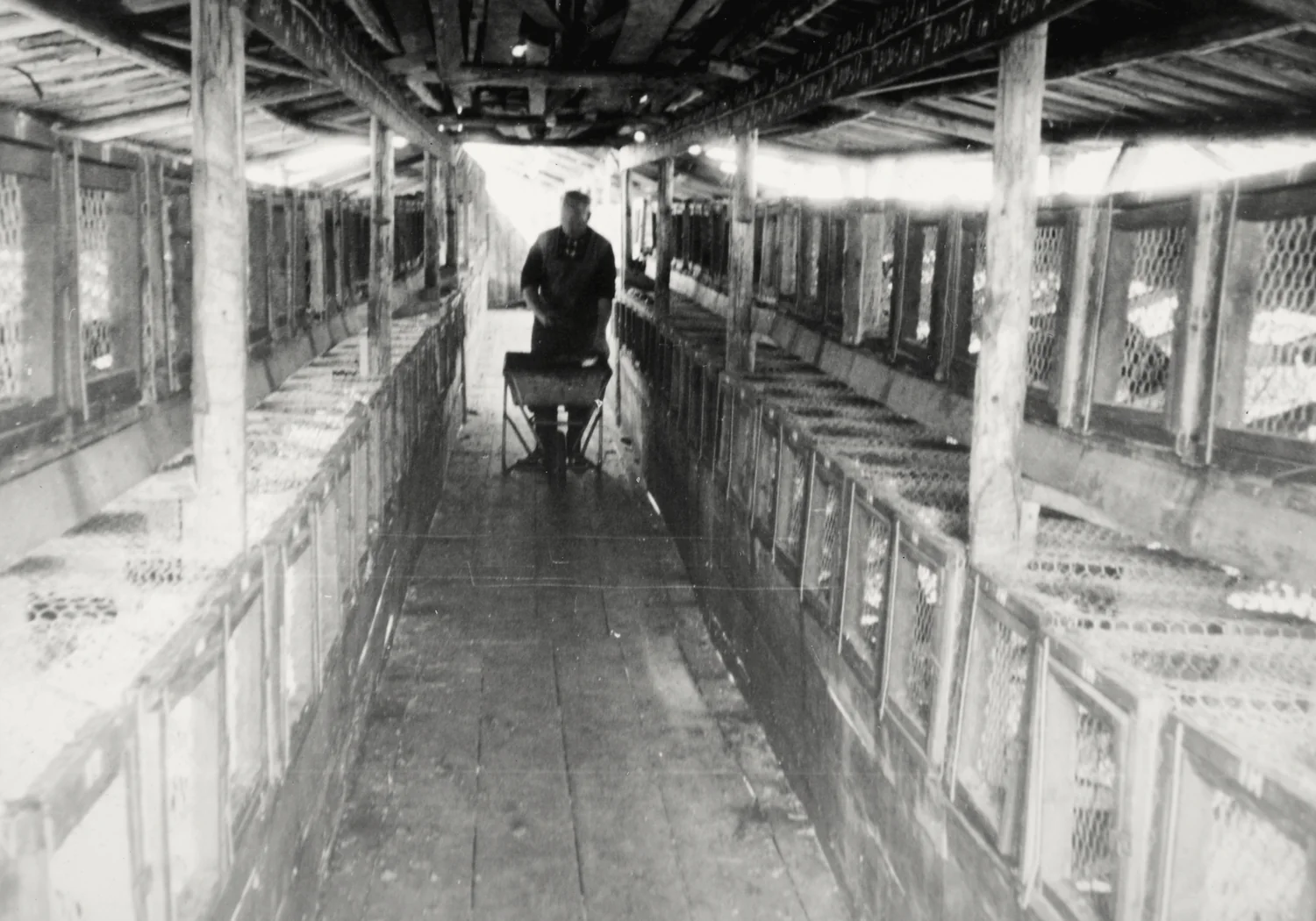
Black-and-white photograph inside a long mink shed: a man pushes a feed cart down a plank aisle between two rows of wire-fronted cages.
Feeding mink, Norway, about 1950
Kveikur, RÚV, 17 March 2026

RÚV's Kveikur broadcast images taken without the farmers' knowledge in October and November 2025, at three of the six mink farms then operating, by a Finnish photographer and two other Finnish animal-protection activists. RÚV wrote that they show animals that had started gnawing themselves to the bone, and a dead mink on a nest box among live animals; cage tags and video confirm where they were taken. None of the three farms is Dalsbú; all three closed about a month after the filming, for financial reasons.

Asked whether welfare had been breached, Björn Harðarson, whose farm was one of them, said: In some cases yes, they hadn't been taken out. He and Bjarni Stefánsson said the WelFur method is scientifically researched.

RÚV, 2026
MAST's chief veterinary officer, to RÚV, 17 March 2026
“I think it is very hard in these conditions for mink to show their natural behaviour. […] But it is the government's decision what activity is permitted.”
19 March 2026

The Icelandic Veterinary Association asked the government to take skýra afstöðu gegn loðdýrahaldi, a clear position against fur keeping, in its review of the rules, RÚV reported; the statement said 17 EU member states had banned fur farming or were working on a ban. The Animal Protection Society of Iceland called for a ban. Its chair had told RÚV the day before that two years between inspectors' visits is no check.

RÚV, 2026 · DÍS, 2026
The record

A Ban on New Cages.

Act No. 32/1951, passed 30 January 1951
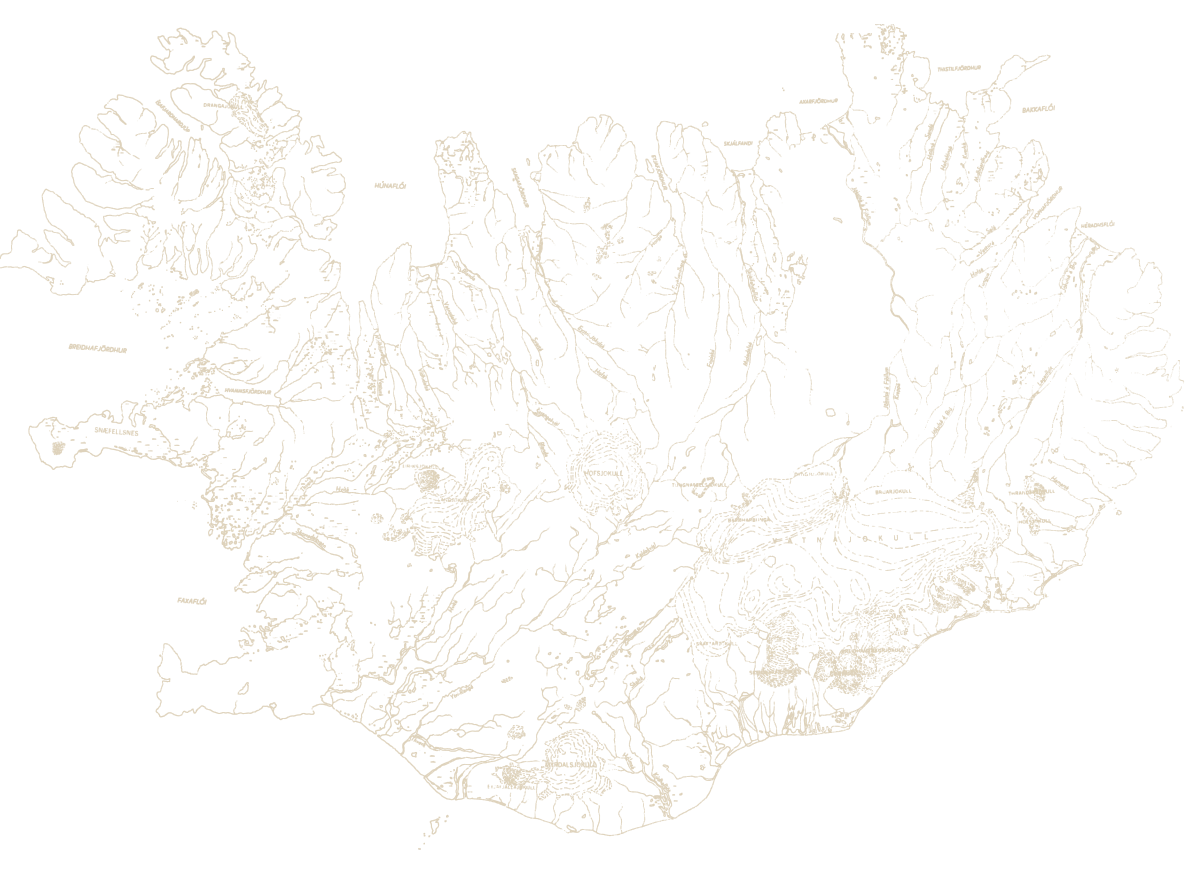
Outline of Iceland's coast, rivers, lakes and glacier edges in pale lines on a dark ground.
From a US map of Iceland, 1949
1931

The new journal Loðdýrarækt promotes mink for fishing towns as an animal that “eats almost only fish”. That autumn the first mink arrive from Norway.

1932

Escaped mink are seen near the first farms. Guðmundur G. Bárðarson writes that it would be wisest to ban all import of mink; the journal Loðdýrarækt replies that he has upset the balance of people's ideas about animals.

1951

Act No. 32/1951: “It is prohibited to erect new mink cages after this Act takes effect.” Existing cages may stand for 18 months, or five years in concrete houses. No mink are farmed from 1953 until 1969, according to a 2016 review.

4 March 1968

The lower house shelves a bill to allow mink farming again, 21 to 13. Its supporter Ásberg Sigurðsson had called the danger of escape “so vanishingly small” that it was no valid argument.

16 May 1969

Act No. 68/1969 passes, 14 to 4 and 21 to 11, requiring triple protection: cage, shed and outer fence. Its rapporteur, Sveinn Guðmundsson, had said the valid argument against it was the risk of escape, “and then disaster is certain”. Farming restarts in 1970.

17 April 1986

The prime minister, Steingrímur Hermannsson, says over 200 fur farms have been established and their number is rising fast. The late-1980s peak was 240 by a government committee's later count, about 300 by Bændablaðið's.

22 December 1989

Act No. 112/1989 guarantees up to ISK 300m of rescheduled fur-farm debt. In March 1991 the agriculture minister, Steingrímur J. Sigfússon, says about 120 fur farmers are left.

16 September 2022

Valgerður Árnadóttir and five other MPs propose that all fur farming end before 1 January 2025. The resolution never reaches a first debate.

4 December 2025

The five fur farms in South Iceland stop, for financial reasons by their owners' account, and pelt about 30,000 animals, Bændablaðið calculated. One farm is left: Dalsbú, in Mosfellsdalur.

29 July 2026

Dalsbú is broken into in the night and cages are opened. Police are investigating; on 26 October they said no one was suspected.

20 November 2026

The Ministry of Industries publishes a draft Animal Welfare Act. It bans drowning wild mink, keeps exhaust killing for fur animals and contains no ban on fur farming.

Comments close on 4 December 2026 at 23:59. The draft has not yet been tabled in the Alþingi.

Loðdýrarækt, 1931 · Náttúrufræðingurinn, 1932 · Alþingi records, 1948–2022 · +5
Act V · Europe

24 in Full or in Part.

Laws to end fur farming, by the Fur Free Alliance's count

The Fur Free Alliance lists 24 European countries and territories that have legislated to end fur farming, in full or in part. Poland, Europe's largest producer, joined the list on 2 December 2025. Five of the bans are not yet in force.

The list counts Guernsey, a Crown Dependency; France, which banned only non-domestic species; and Romania, which banned mink and chinchilla from 2027. Counting only sovereign states with a law that bans all fur species gives 20, or 21 with the all-species ban Bulgaria's parliament passed on 13 November 2026, by our count, from the national texts where we could read them and the Fur Free Alliance otherwise.

Fur Free Alliance, 2026 · Eurogroup for Animals, 2025 · national texts
The cases nearest Iceland's
201
Fur farms in Norway on 1 January 2017; its ban passed in 2019 and allowed keeping until 1 February 2025. By September 2024 Norway had paid nearly NOK 1.64bn across all its schemes.
€150 m
Compensation for about 150 Dutch businesses, plus €33.7m for demolition and other items (our sum). The ban was brought forward to 8 January 2021 after more than 65 of about 140 mink farms had been infected with the coronavirus and culled.
2029
Denmark has no law banning mink farming. It culled its mink from November 2020 and allowed farming again from 2023; on 23 October 2026 the government said its seven remaining farms end by 2029 at the latest.
2033
Poland's Act of 7 November 2025, signed on 2 December, bans new farms and lets existing ones run to 31 December 2033; compensation falls from 25 to 5 per cent of average annual fur revenue, none after 1 January 2031.
Lovdata · Storting, 2019 · Tweede Kamer, 2026 · +2
The EU and the market

Fur Free Europe, a citizens' initiative, handed the European Commission 1,502,319 verified signatures in June 2023. The Commission said it would say by March 2026 whether it considered a ban appropriate; by 25 November 2026 it had not, and Rapporteur reported a reply expected on 9 December. The EU has listed the American mink as an invasive alien species, applying from 7 August 2027; there is no evidence that the listing applies in Iceland. World supply of mink pelts fell from 94.7 million in 2015 to 13.4 million in 2024, by the Finnish breeders' association's count. Saga Furs reported that at its March 2026 auction it sold all 3.1 million mink pelts offered, at average prices 76 per cent above June 2025.

ECI register · European Commission, 2023 · Rapporteur, 2026 · +3
The 24 on the list, and four others
CountryLawBan in forceScopeCompensation
Austria20041 Jan 2005all fur animalsnone in the Act
BelgiumFlanders 2019; Wallonia 2015; Brussels 2017 or 2018Flanders 1 Dec 2023allFlanders: yes, falling 10% a year; total not found
Bosnia and Herzegovina20092028, not yetallnone, per FFA
Bulgaria2022 order; all-species ban passed by parliament 13 Nov 20262022 order; 2026 ban not known2022: American mink; 2026: allnone, per FFA
Croatia20061 Jan 2017allnot found
Czechia201731 Jan 2019allcapped at average annual net profit
Estonia20211 Jan 2026 (end of transition for existing mink and raccoon-dog farms)allnot found
France20212 Dec 2021non-domestic species onlynot found
Ireland20229 Dec 2022allabout €3.4m paid by Oct 2025
Italy2021keeping ended 30 Jun 2022all€3m a year fund, 2022–23
Latvia20221 Jan 2028, not yetallnot found
Lithuania20232027, not yetall€3, €2 or €1 an animal by year of closure
Luxembourg20182018allnot found; no farms
Malta20222022allnot found; no farms
Netherlands2013, brought forward 20208 Jan 2021allabout €150m, plus €33.7m other items
North Macedonia20142014allnot found
Norway2019keeping ended 1 Feb 2025allnearly NOK 1.64bn paid by Sep 2024
Poland2025new farms from the Act's entry into force; existing 31 Dec 2033, not yetall except rabbit25% falling to 5% of average annual fur revenue
Romania20241 Jan 2027, not yetmink and chinchillanot found
Serbia20091 Jan 2019allnot found
Slovakia201931 Dec 2025allnone in the Act
Slovenia20132015allnot found
United KingdomEngland and Wales 2000; Scotland and Northern Ireland 20021 Jan 2003 in Great Britainallstatutory scheme; total not found
Guernsey (Crown Dependency)2024, per FFA2024not checkednot checked
Denmark (not on the list)fox 2009; raccoon dog 2011mink to end by 2029 at the latestfox; new raccoon-dog holdings2020 mink cull: about DKK 29.1–29.2bn, estimate
Sweden (not on the list)inquiry SOU 2026:29 proposes a ban from 1 Jul 2027; no bill––SEK 180m voluntary closure aid, 2024
Finland (not on the list)no ban–––
Iceland (not on the list)no ban; the draft Act of 20 Nov 2026 contains none–––

Year of law and date in force from the national texts where read, otherwise from the Fur Free Alliance. “Not found”: no figure in the sources read.

In Iceland
42%
Of respondents fairly or very opposed to fur farming in Iceland, against 20 per cent in favour and 38 per cent in between, in a Maskína poll for Samtök um dýravelferð á Íslandi, an animal-welfare organisation. RÚV reported that it was the third poll made for the organisation since December and that all three showed much more opposition than support.
4,329
Signatures on 25 November 2026 on a Change.org petition to ban fur farming in Iceland, started during the same organisation's campaign in March 2023 and addressed to the Minister of Industries.
Vísir and RÚV, 2026 · Change.org, 2026
20 November 2026

The Draft Animal Welfare Act Bans Drowning Wild Mink. It Keeps Fur Farming Legal.

Article 23 of the draft, on killing: No drowning. No exhaust, except for fur animals.

— days left to comment · closes 4 December 2026, 23:59

Dalsbú, Mosfellsdalur

A house at Iceland's last mink farm, drawn from published photographs. The light and the weather are the farm's, now.